Bhakti Sastri - Unit 5.1 - Sri Isopanisad
Session 1 - 20th January 2026
NOI Overview
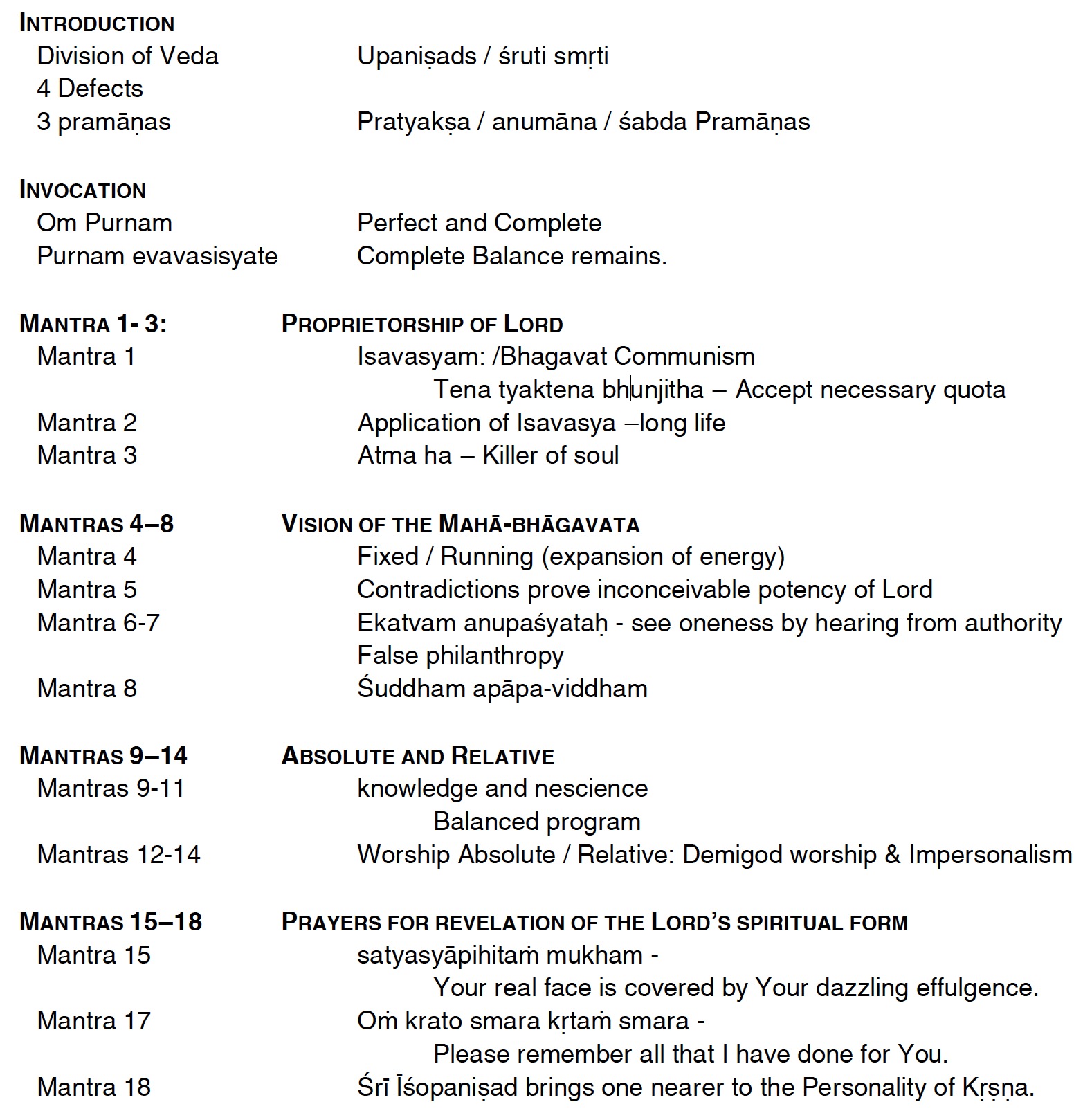
INTRODUCTION
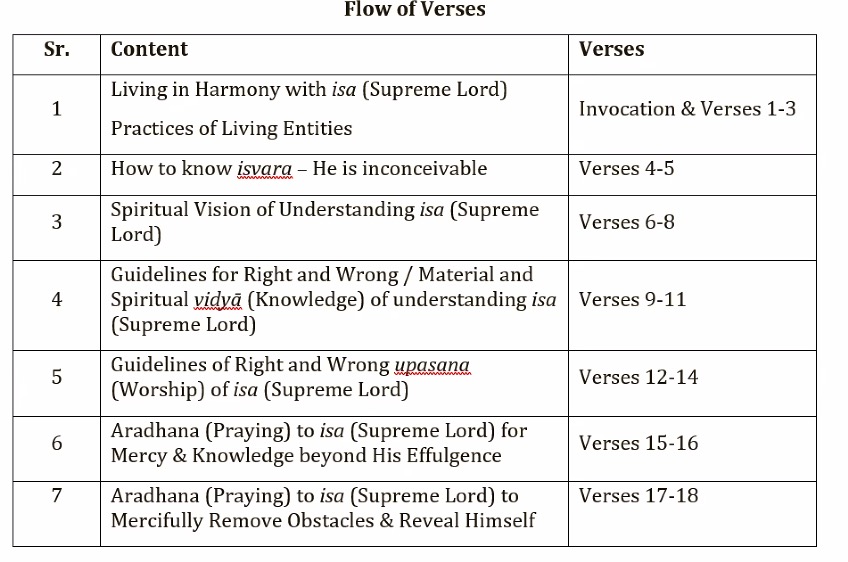
In the Introduction, Çréla Prabhupäda establishes the definition of Veda, and the need to take guidance from the Vedas. Sri Éçopaniñad is directly Vedic literature, being part of the çruti.
INVOCATION
The Invocation describes the objective of the book: the Absolute Truth, the Personality of Godhead. By repeated recognition of His various types of completeness, Sri Éçopaniñad establishes the supreme position and power of the Personality of Godhead.
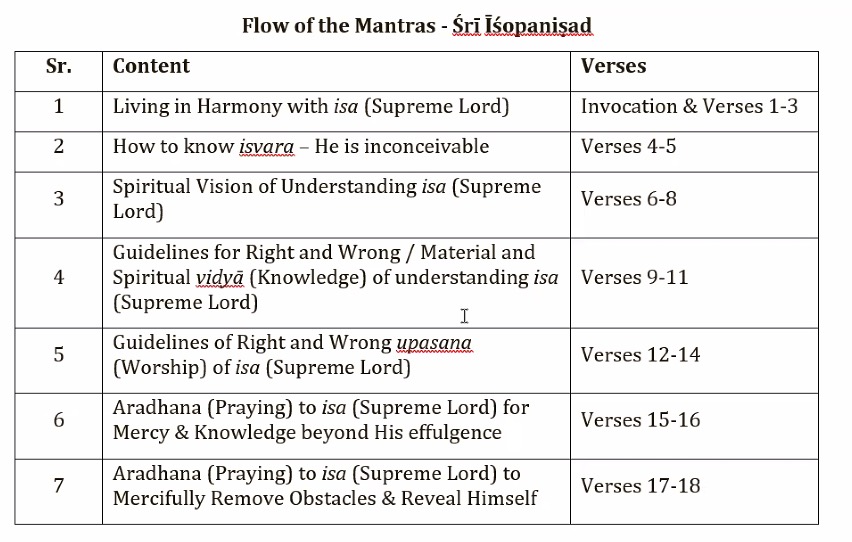
M****ANTRAS 1-3: P****ROPRIETORSHIP AND THE L****AWS OF G****OD
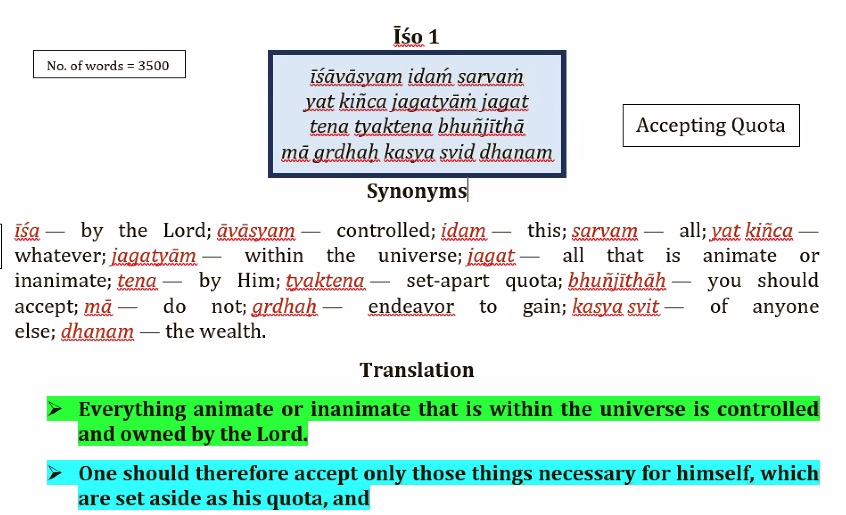
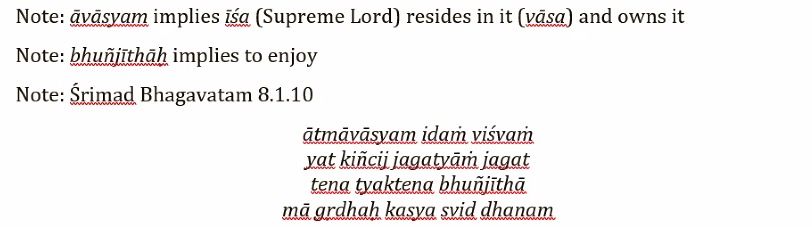
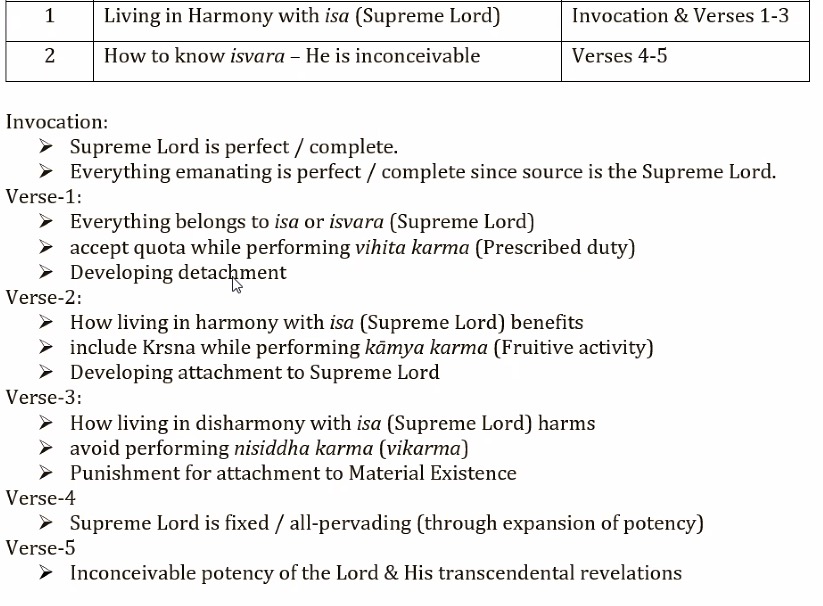
The Invocation explained that the Personality of Godhead is perfectly complete, as are His energies. Çréla Prabhupäda comments that, “all forms of incompleteness are due to incomplete knowledge of the Complete Whole.” Mantra 1 describes how the living entities can again regain their sense of completeness by acting in relationship with Kåñëa. This action is called éçäväsya consciousness. Mantra 2 explains the benefit of working in the éçäväsya conception: one becomes free from karmic reaction and acts on the liberated platform. Such activities are the only method for freedom. Mantra 3 explains the fate of those who fail to recognize the Lord’s proprietorship and therefore act in a vikarmic way.
M****ANTRAS 4–8: T****HE V****ISION OF THE **MAHÄ-**BHÄGAVATA
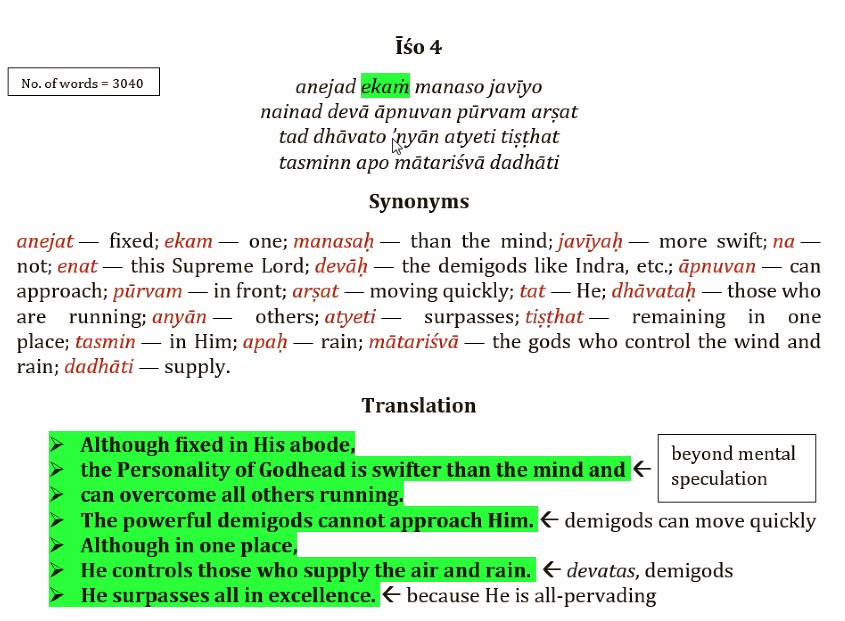
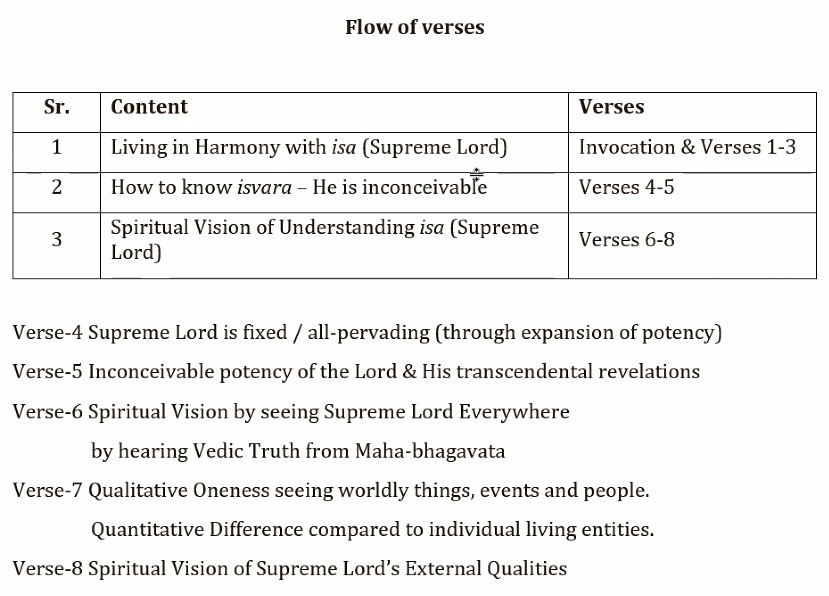
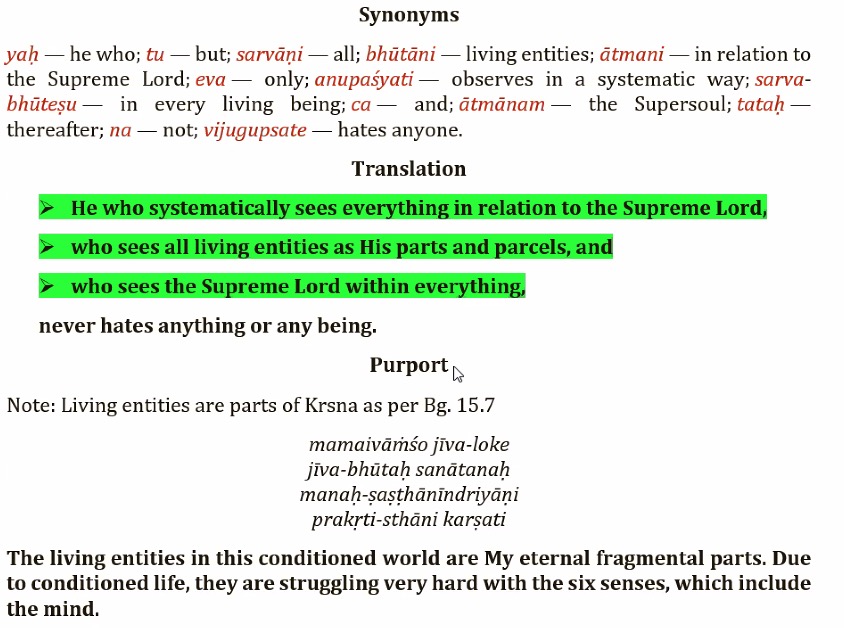
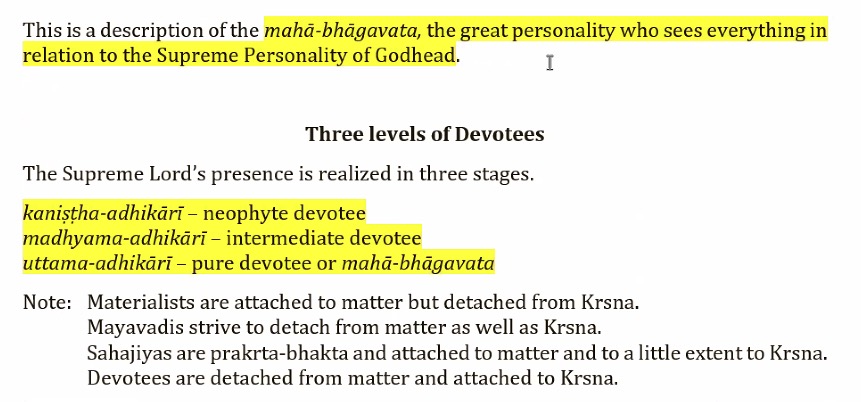
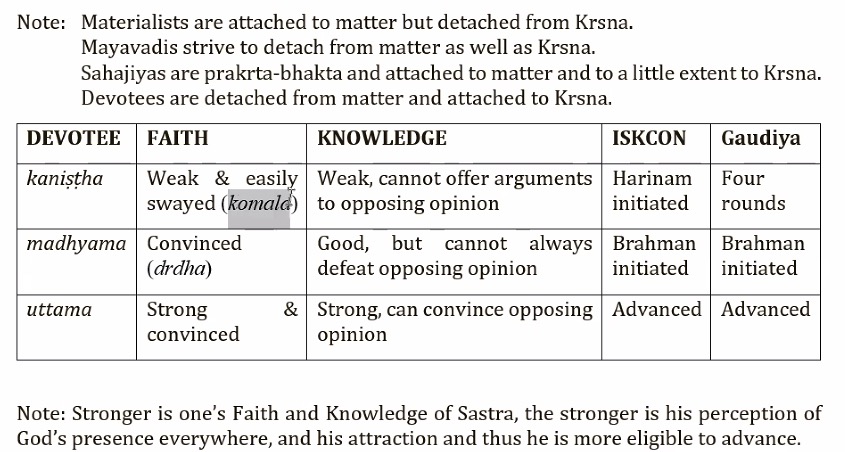
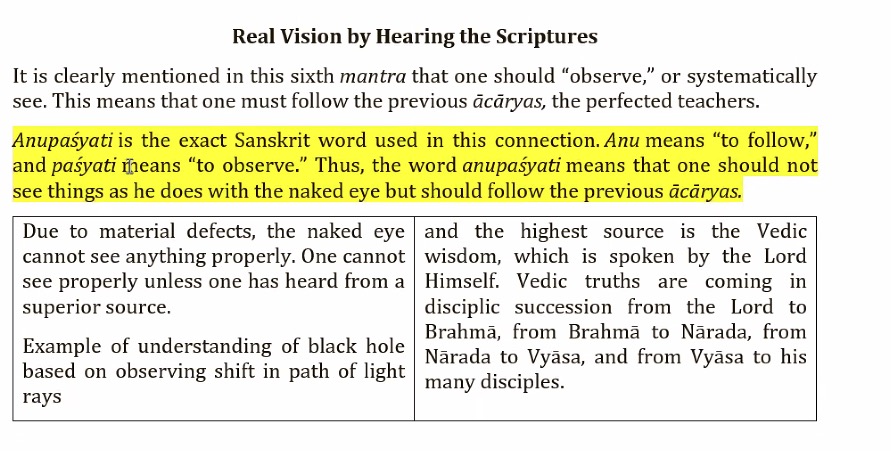
Mantra 4 explains why such people are unable to understand the Lord’s position: He is beyond material calculations and is thus known only when he reveals Himself. Mantra 5 continues this discussion describing that the Lord has inconceivable potencies which render Him unknowable to those whom He does not favor. Mantra 6 describes the vision of one who can see Kåñëa everywhere, the mahä-bhägavata. Mantra 7 continues describing the consciousness of the mahä-bhägavata, which was introduced in Mantra 6. Mantra 8 describes some qualities of the Lord as he is known by the mahä-bhägavata as described in Mantras 6 and 7.
M****ANTRAS 9–14: T****HE A****BSOLUTE AND THE R****ELATIVE
9 - 11: In Terms of Knowledge
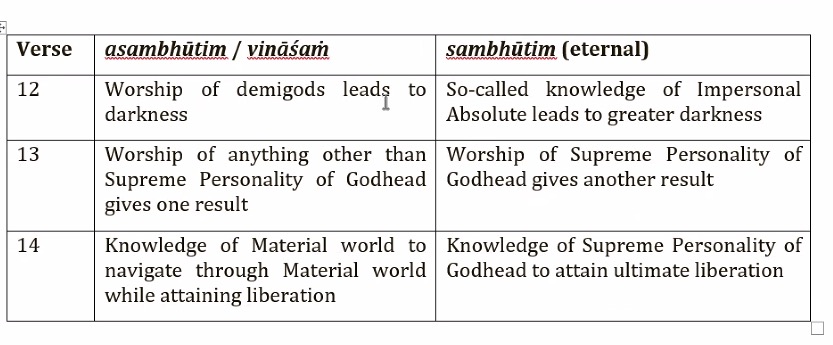
12-14: In Terms of Worship
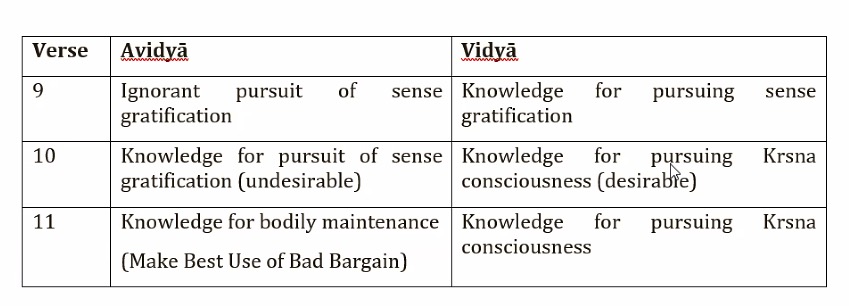
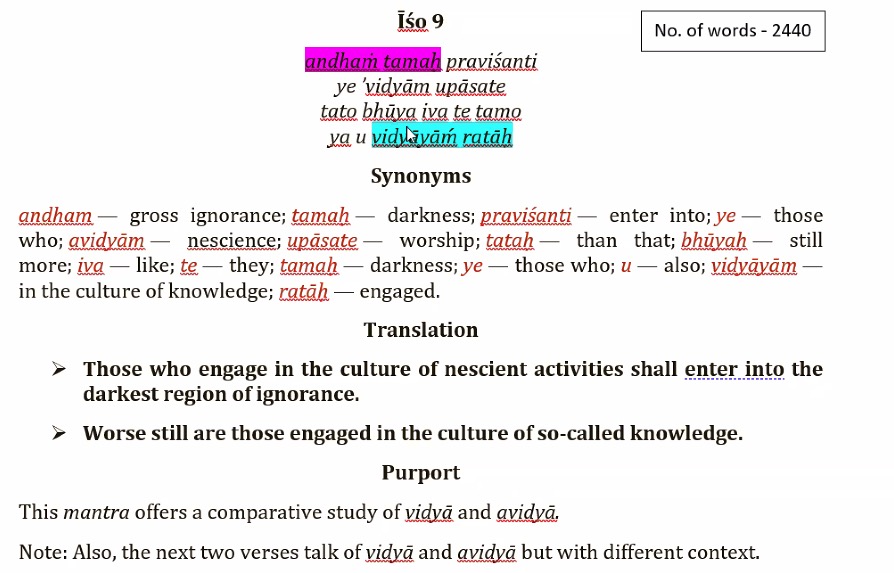
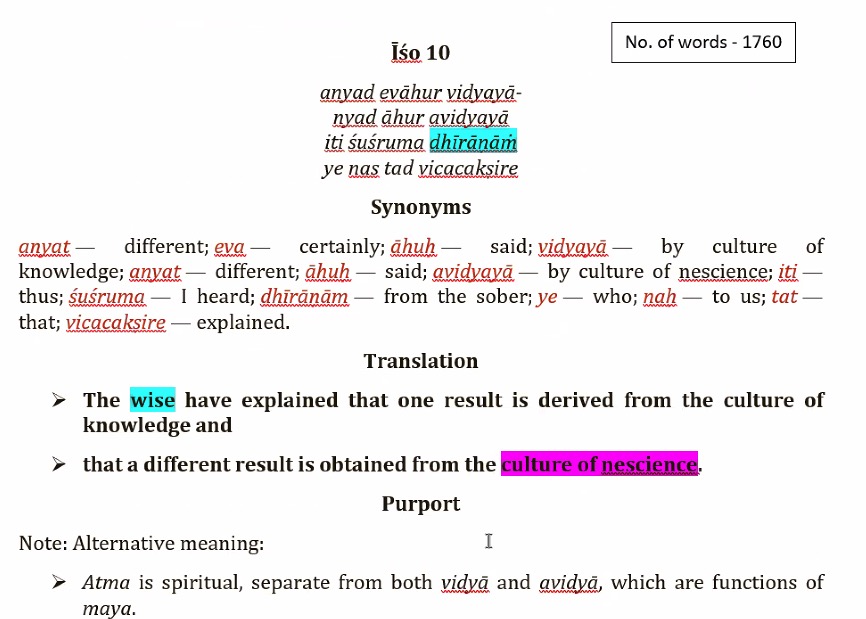
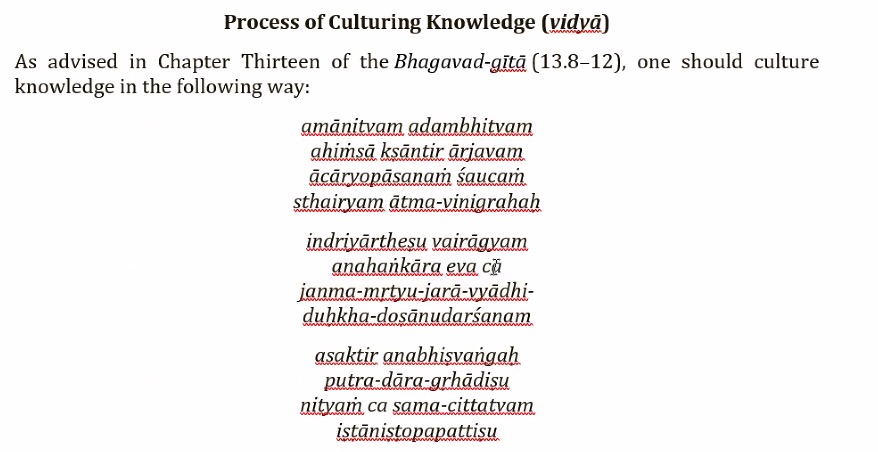
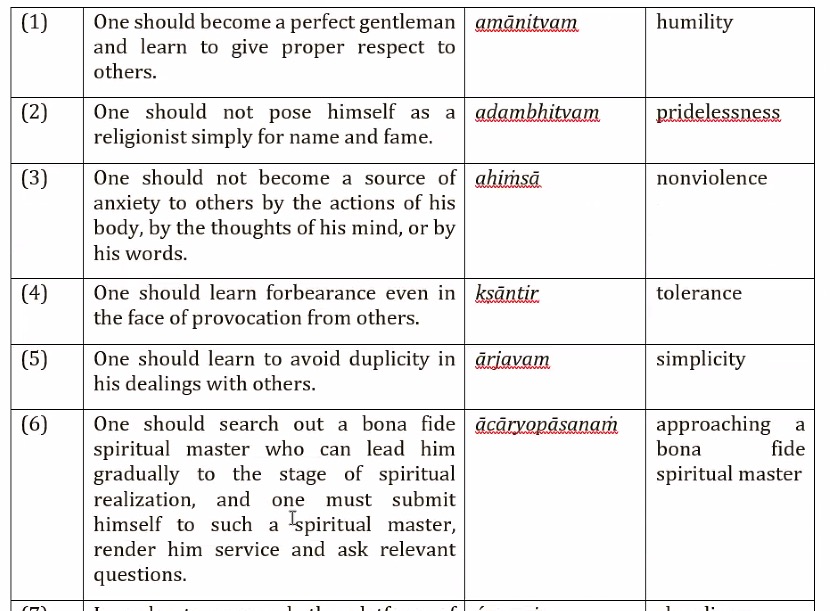
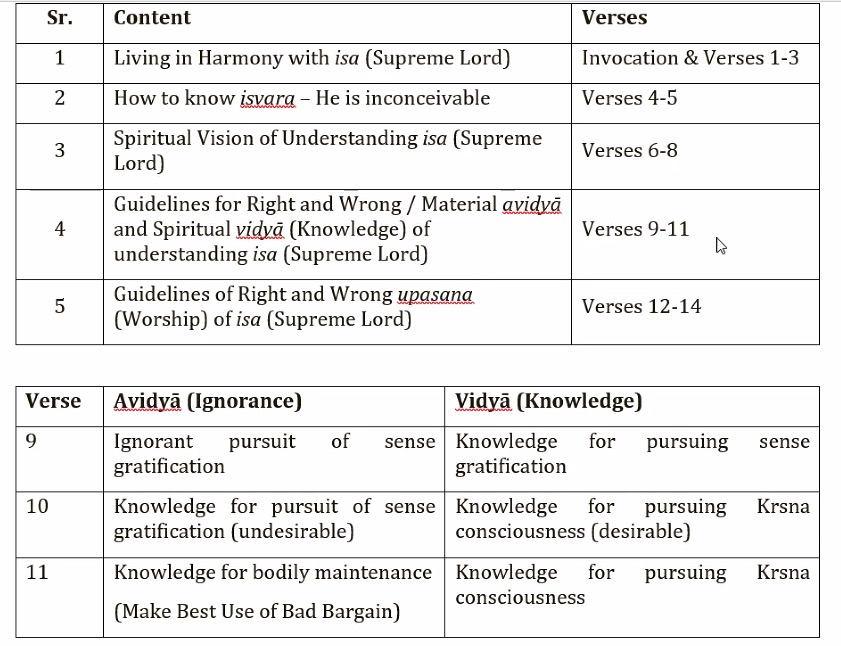
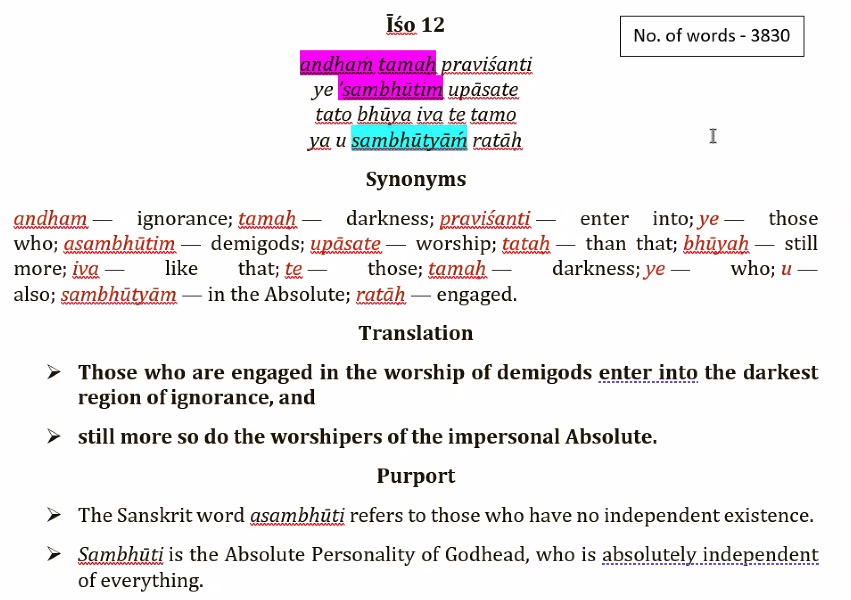
Mantra 9 discusses two kinds of people who lack knowledge of Kåñëa: those who are simply ignorant and those who are followers of material scholarship, thinking it the end-all of knowledge. Both kinds of people disregard the Lord’s proprietorship and consequently are degraded into the “darkest regions of ignorance.” Mantra 9 described the results of cultivating ignorance and false knowledge. Mantra 10 explains that true knowledge brings a different result than either of these. It also emphasizes the need to take guidance from a dhéra in the act of discriminating between real and illusory knowledge. Mantra 11 describes how one must know the relative positions of material and spiritual knowledge to transcend the material energy and attain deathlessness. Just as verses 9–11 compared knowledge and nescience, and the respective destinations for the followers of each, verses 12–14 explain the worship of the relative and the Absolute. Just as the cultivation of wrong knowledge can be binding, so too can improper conceptions of the Absolute Truth. Mantra 13 explains that one achieves a different result when his understanding of the Absolute is guided by a dhéra. Mantra 14 states that one must know the spiritual and material energies properly, in their respective positions, to achieve liberation.
M****ANTRAS 15–18: P****RAYERS FOR R****EVELATION OF THE LORD’S **S**PIRITUAL F****ORM AND M****ERCY AT THE T****IME OF DEATH.
Mantras 12–14 described the necessity of understanding Kåñëa in relationship with His material energies. Mantra 15 explains that one must also understand Kåñëa’s relationship with His spiritual potency, the brahmajyoti, in order to achieve realization of Him. Mantra 16 continues the prayer of Mantra 15 for the Lord to reveal His spiritual form. In Mantra 17, the prayer emphasizes understanding Kåñëa at the time of death. Mantra 18 is the concluding prayer of the devotee, who desires to achieve Kåñëa’s mercy.
Instructor - HG Swarup Krsna Das
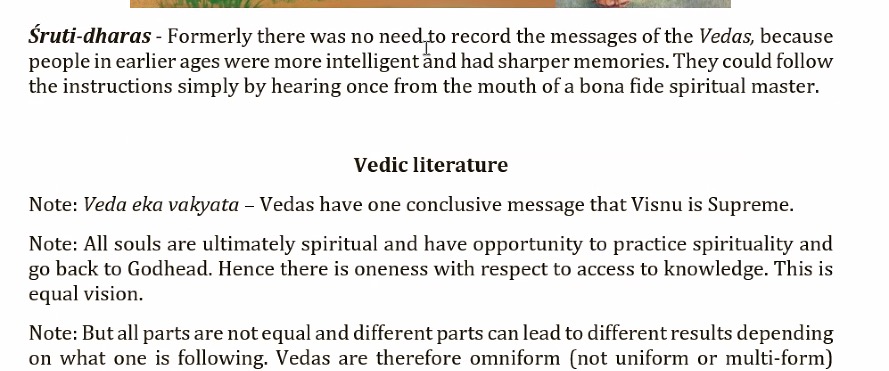
- Veda is sound incarnation of the Supreme Lord.
- Comes from the verbal root, vit, which means "to know" or "to be aware".
- Knowledge presented in the form of sound or Sanskrit verses or mantras sung in meter. Note: Collection of mantras is sukta and collection of suktas is a samhita.
- Apauruseva - perfect knowledge that comes from the spiritual world directly from Krsna. This knowledge is not from the material world.
- Sruti - learnt from authoritative sources through aural reception (hearing).
- Tattva or truth accepted without interpretation.
- Parampara - comes down by disciplic succession.
- Four Vedas (Rg, Sama, Atharva, Yajur) divided & compiled by Vedavyasa for Kali-yuga
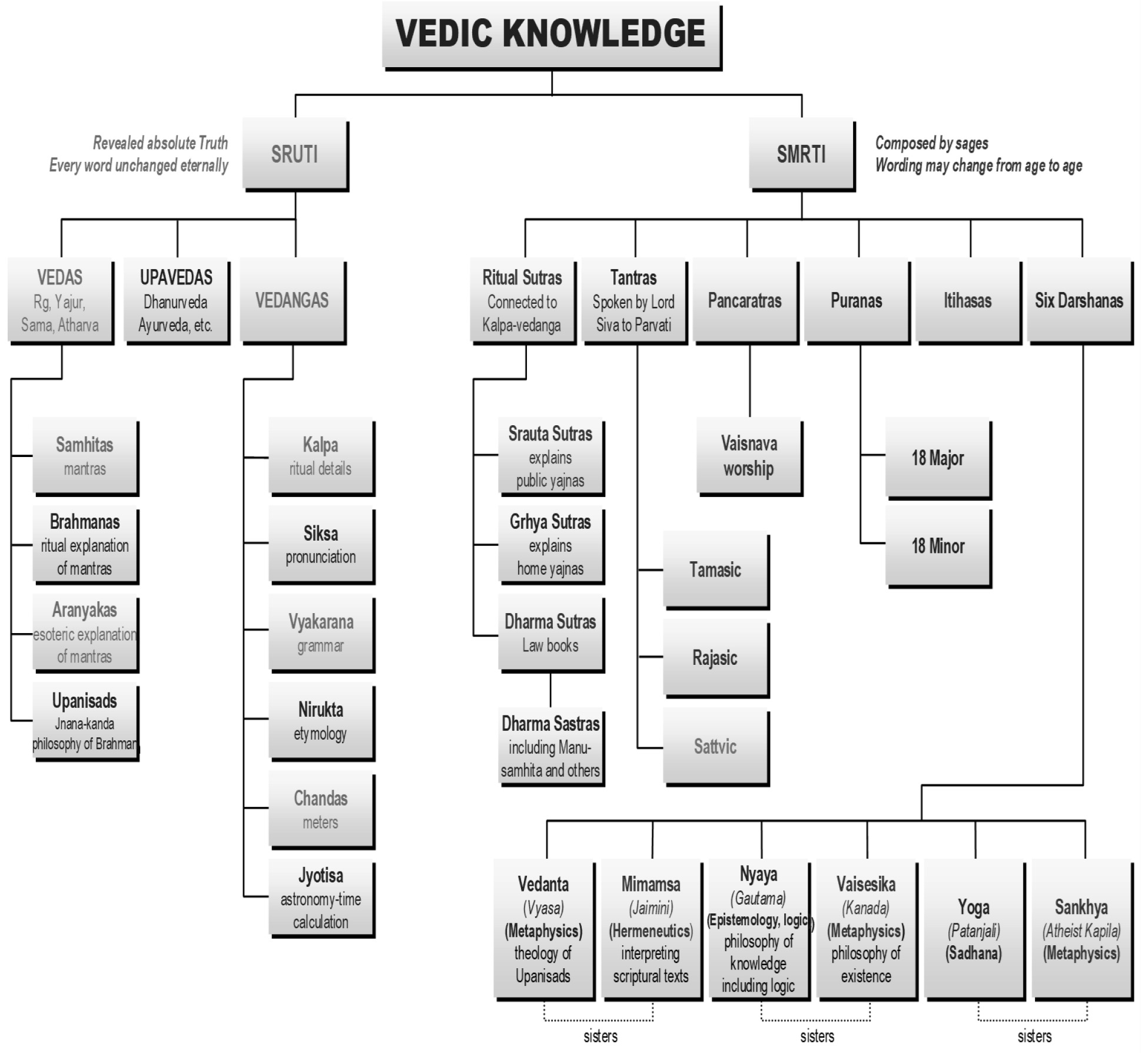
Sankhya here is not the same as that mentioned in BG Chapter 2, but from atheist Kapila.
Sankhya is analytical understanding related to matter. Yoga utilizes the understanding to advance to paramatma realization.
Vaisesika deals with material building blocks and consciouness while Nyaya uses logic to justify the knowledge.
Mimamsa deals with result of work as per past deeds based on the Upanisads & Vedanta is the ultimate conclusion of the Absolute Truth based on the Upanisads.
Note: The Vedas are compared to the desire tree because they contain all things knowable by man. They deal with mundane necessities as well as spiritual realization.
The Vedas contain regulated principles of knowledge covering social, political, religious,
Note:
Thinking of oneself based on bodily identification or ahanta is moha (delusion) and thinking of one's possessions or mamata is maha moha. These are two types of False Ego.
Note: A businessman bought lipstick for his wife instead of BTG magazine. Srila Prabhupada commented that the man will remain in material bondage for being attracted to his wife else he would have got liberation if he had taken BTG.
vipralipsa - The third defect is the cheating propensity
Everyone has the
propensity to cheat others. Although a person is fool number one, he poses himself as very intelligent. Although it is already pointed out that he is in illusion and makes mistakes, he will theorize: "I think this is this, this is this." But he does not even know his own position. He writes books of philosophy, although he is defective. That is his disease. That is cheating.
Note: Theists accept God while Atheists reject God since they see errors in Lord's
Karana-apatava
Lastly, our senses are imperfect.
We are very proud of our
eyes. Often, someone will challenge, "Can you show me God?" But do you have the eyes to see God? You will never see if you haven't the eyes. If immediately the room becomes dark, you cannot even see your hands. So, what power do you have to see?
Note: "Bhrama refers to false knowledge or mistakes, such as accepting a rope as a snake or an oyster shell as gold. Pramada refers to inattention or misunderstanding of reality, and vipralipsa is the cheating propensity. Karanapatava refers to imperfectness of the material senses." (CC Adi 2.86 purport)
Pathana Prayoiana
Give examples of 4 defects from your own lives and others. (PrA)
3 types of Varnasrama -
- Asuric varnasrama - caste system of today - determined by birth
- Vedic varnasrama - what Krishna refers to in BG - based on karma and ashrama
- Daivi varnasrama - everyone can attain highest perfection by attributing everything to Krishna
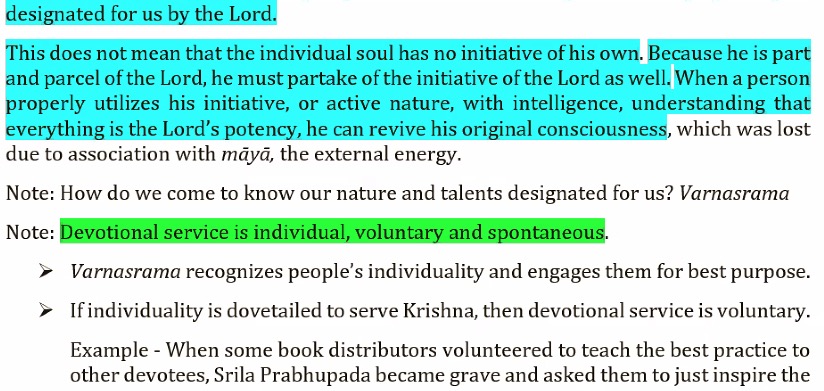
Desire is an intrinsic quality of the soul. #BG-7-27
Dvesa - desire to be independent of Krishna. Until we have this dvesa, we'll stay in this material world as nitya-baddhas.
#BSST is Kamal Nayan Manjari in Vrindavan pastime. Roop manjari is chief maidservant of Radharani, and is Rupa Goswami in LCM pastime.
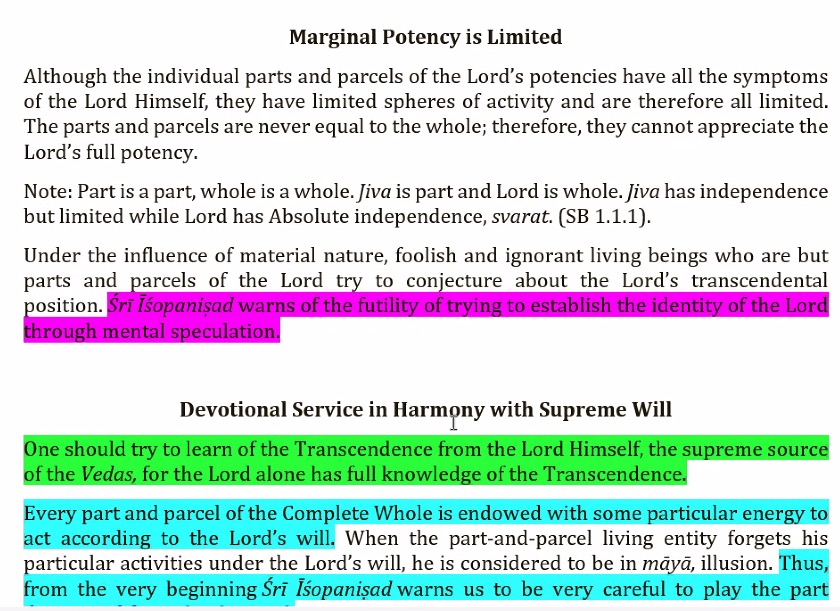
Part and Parcel of Krishna
Part - Vibhinnamsa
Parcel - Spiritual energy of the Lord
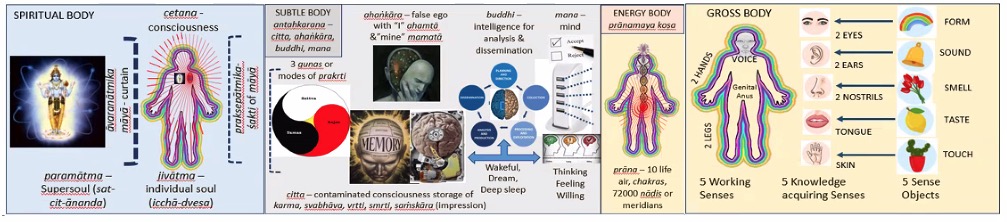
Mind is in Sattva-guna - learning something
Intelligence is in Rajo-guna - initiates activity / creates
False Ego (Ahankara) is in Tamo-guna - wants to sleep
Ceto / cit - is the consciousness, and that's the hard disc where all the contamination is stored, which is what intelligence refers to determine what to do about anything. Then it triggers the mind. Thinking, feeling, willing. And mind tells the senses to do the activity. This consciousness has transformed with Krishna is in the picture for all decision-making.
Soul is not linked to mind, intelligence or senses. It is a passive passenger, just witnessing what activities body is upto.
Mind's function is Sankalpa (planning / accepting) and Vikalpa (rejecting), which comes before thinking, feeling and willing. During chanting, we need both sankalpa and smaranam, in that order.
Session 2 - 22 January 2026
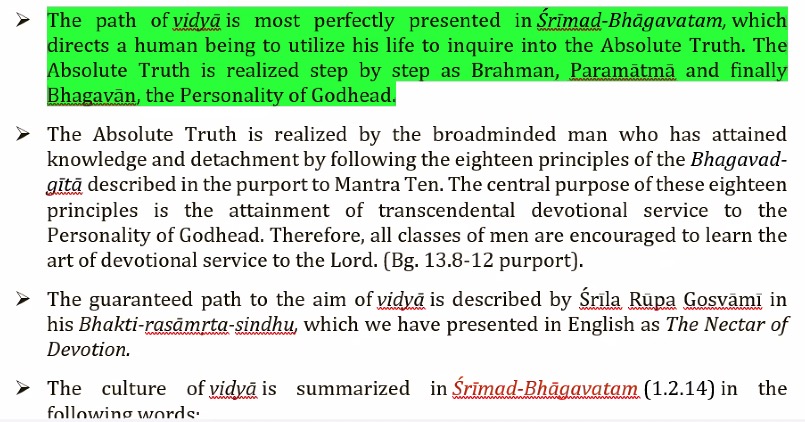
Go back to Godhead does not necessarily mean going to Goloka Vrindavan, but completely dovetailing in the supreme will of the Lord and His service.
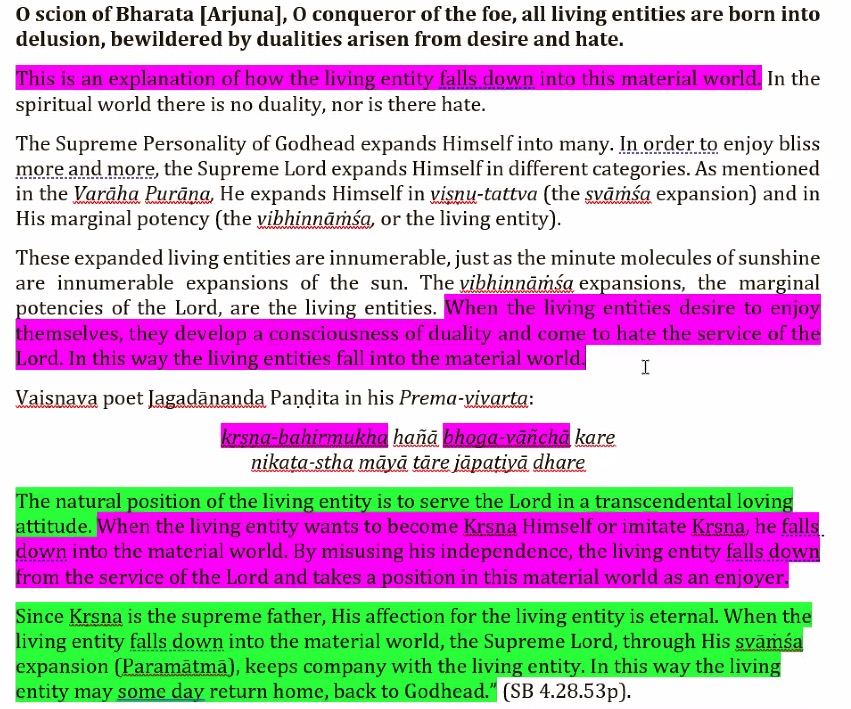
Our consciousness is contaminated.
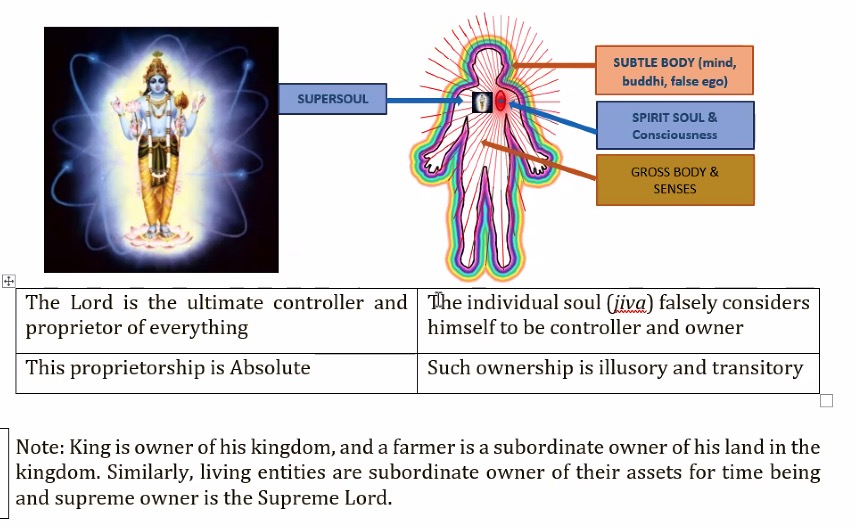
Abhideya - relationship with God
Prayojana -
BG Chapter 13 establishes Abhideya.
BG 9.34 Lord says you will come to me. BG 18.65 Lord says I will see to it that you will come to me. This is prayojana knowledge.
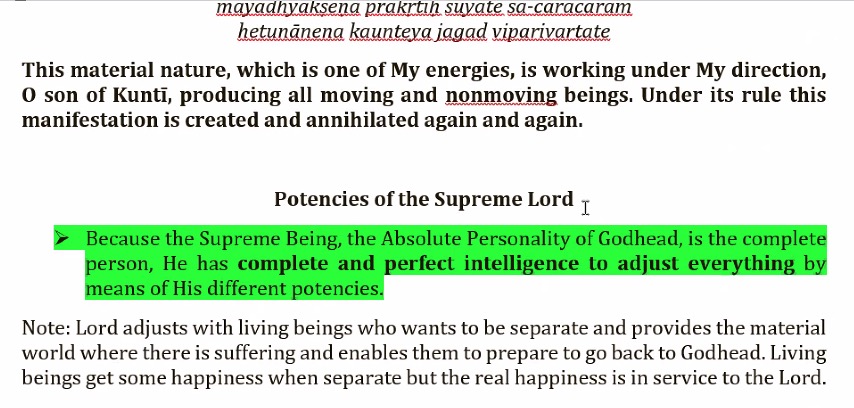
Name, form, qualities, pastimes, associates of the Lord are revealed gradually as we progress in Bhakti.
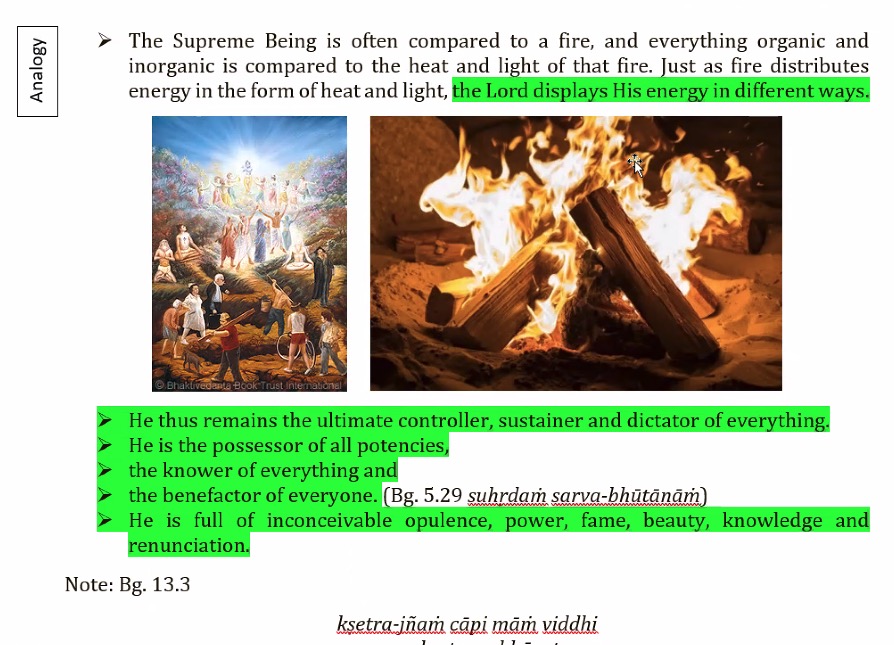
BG 18.68 and 69 expects us to be His friend, benefactor and well wisher by doing what He desires us to follow.
Preacher's role is long term, while teacher's role is short term. A preacher remains close to devotees / students for a longer period of time. Devotee looks up to and consults Preacher.
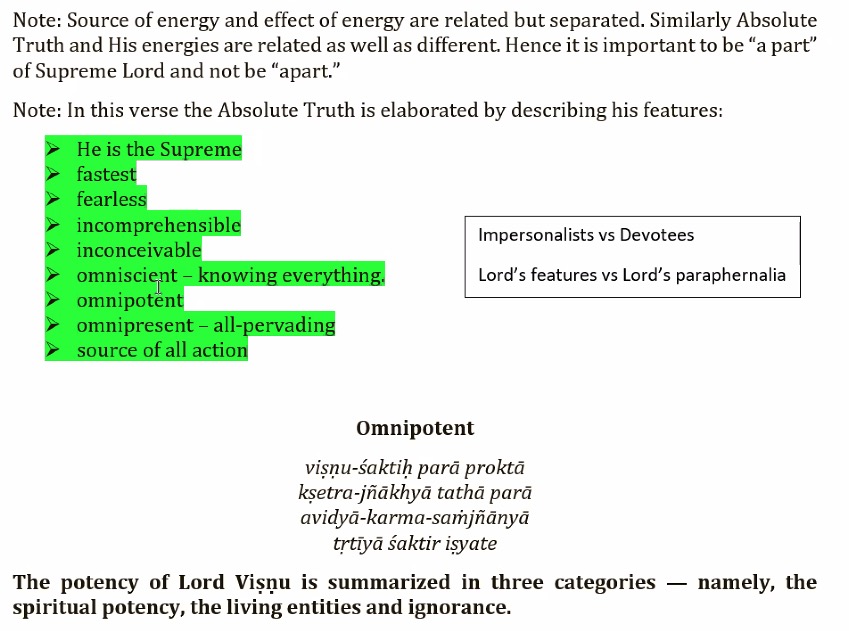
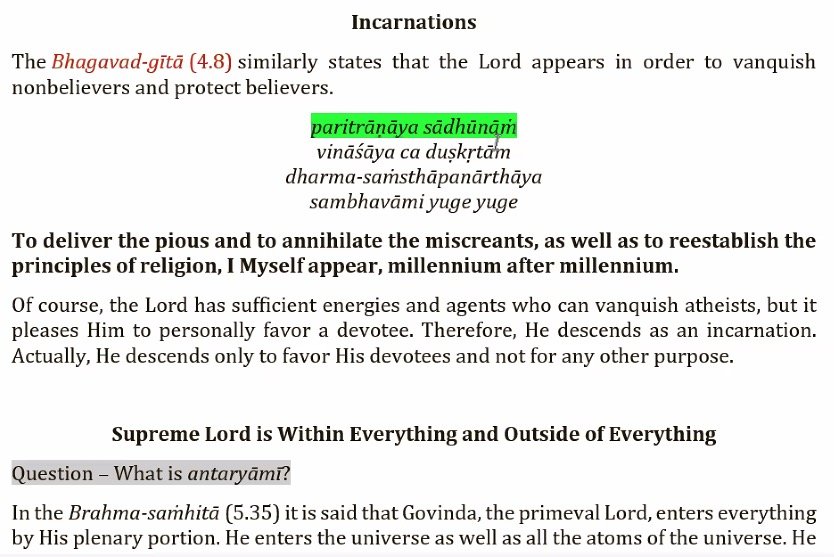
Incarnations of the Lord also have unlimited potencies, but they do not display them.
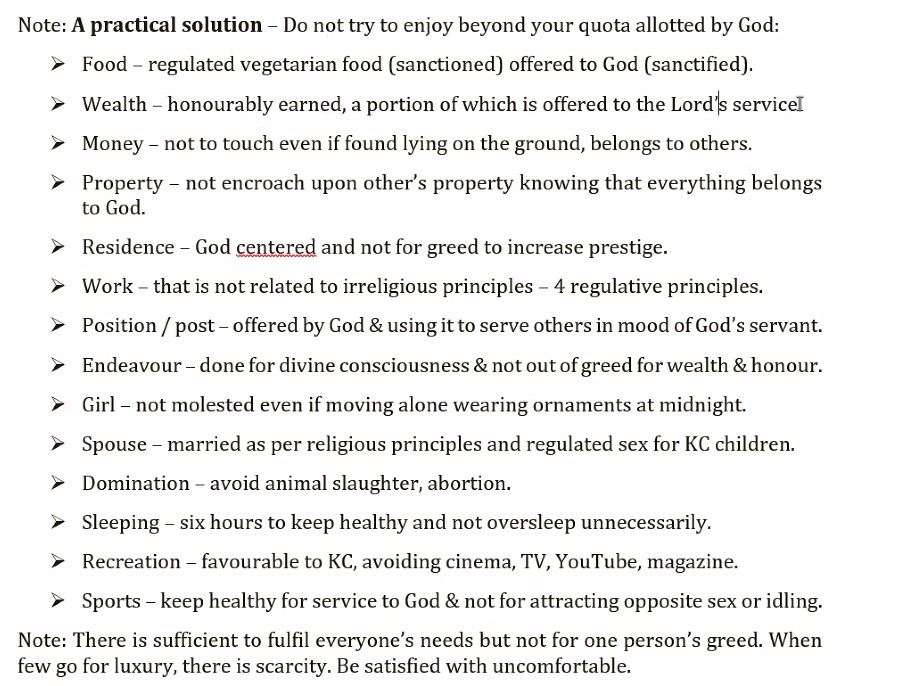
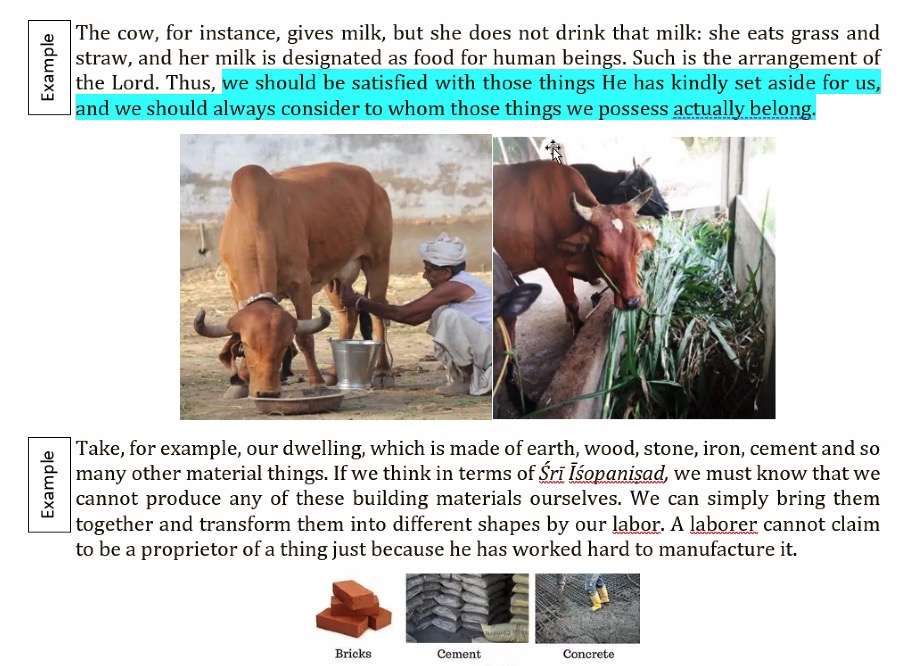
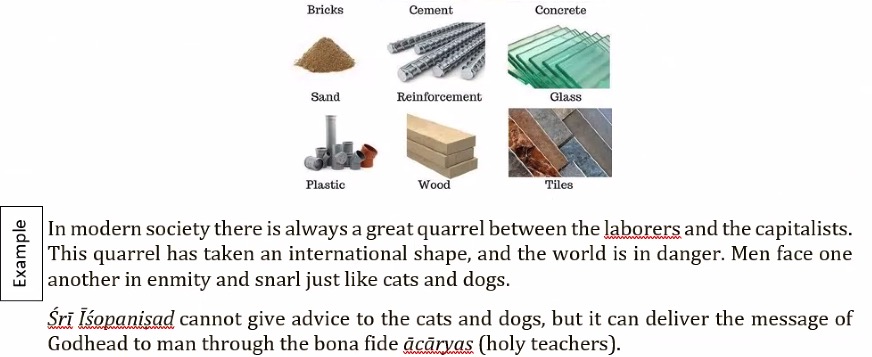
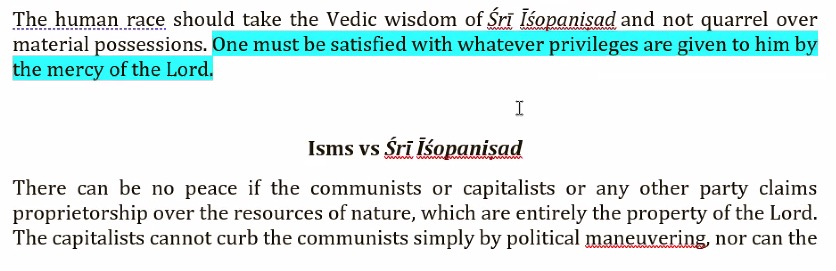
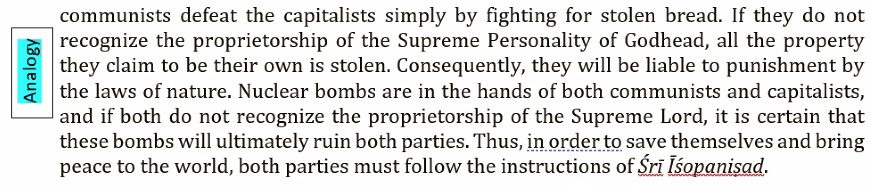
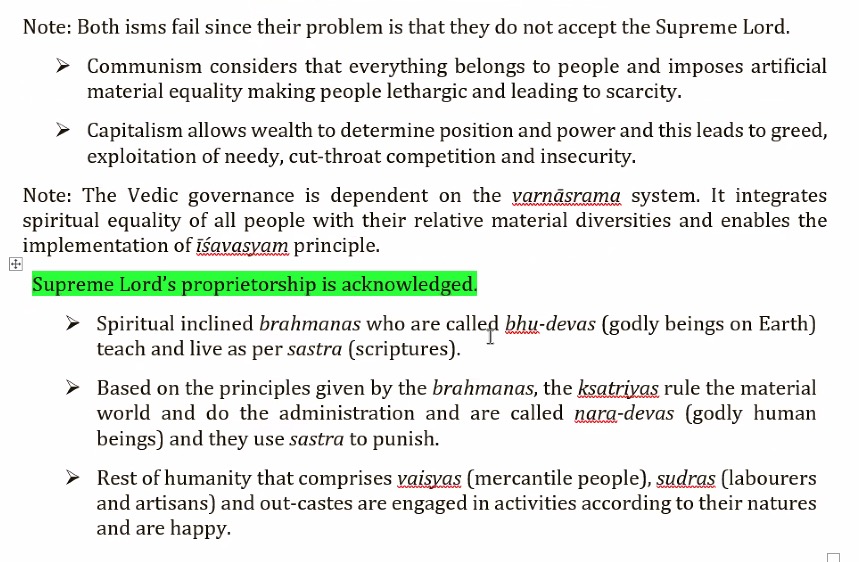
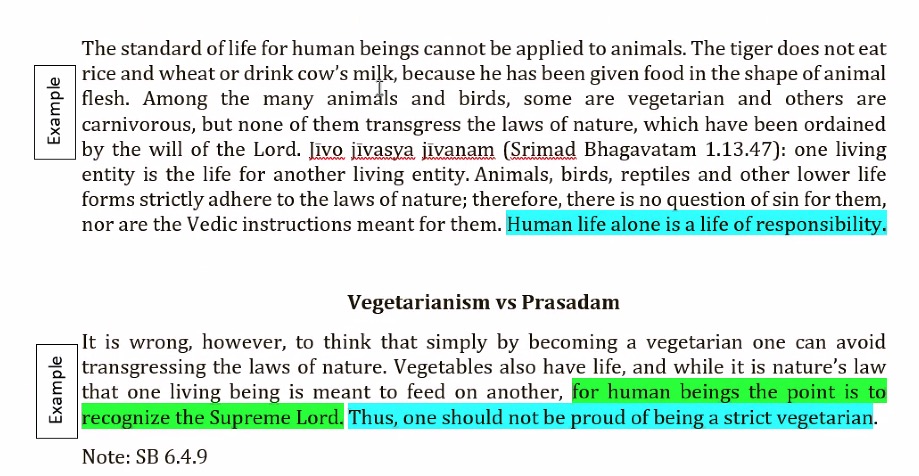
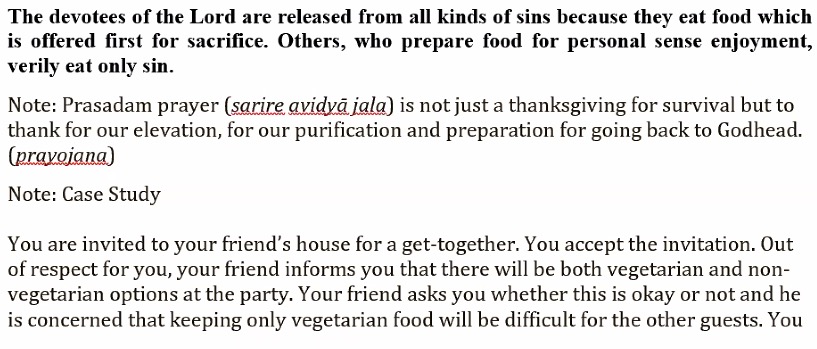
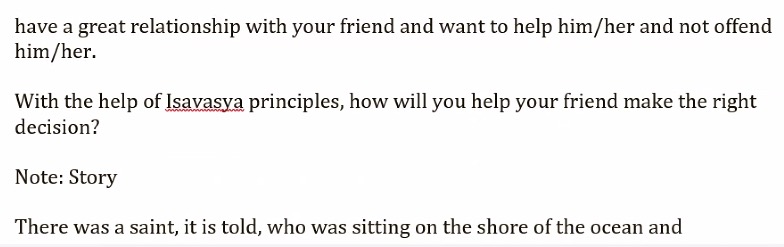
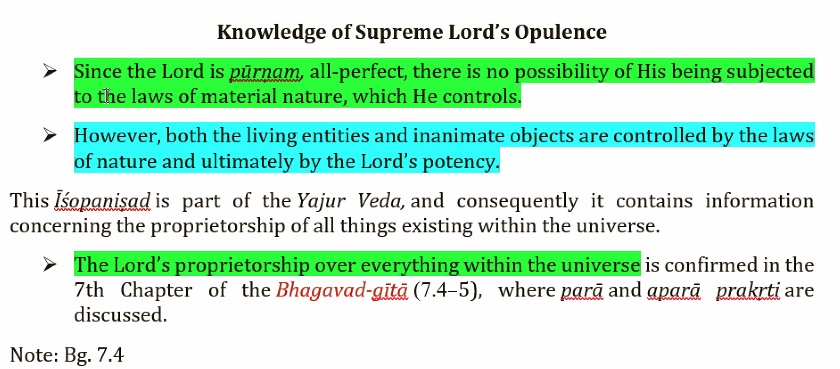
Personally we should follow isavasya principles, but not expect others to follow the same or enforce on them.
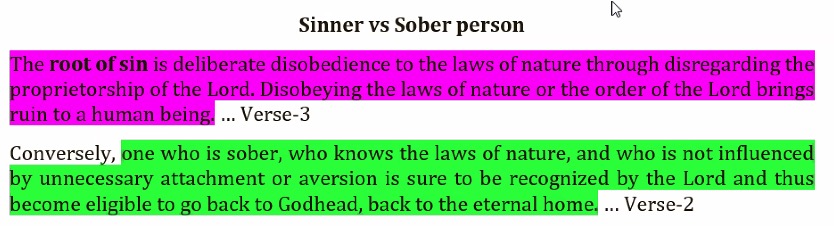
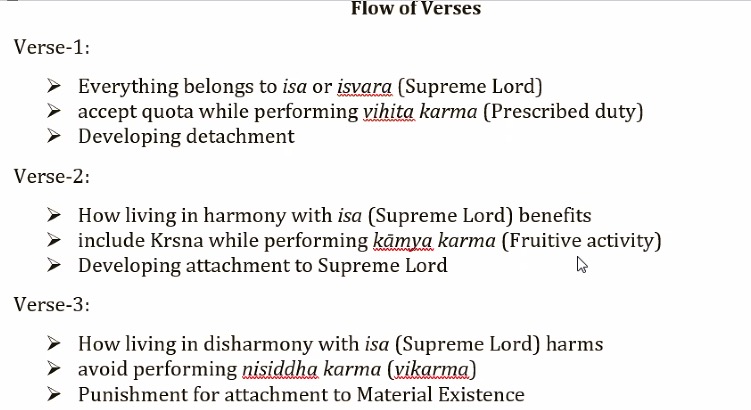
Verse 2
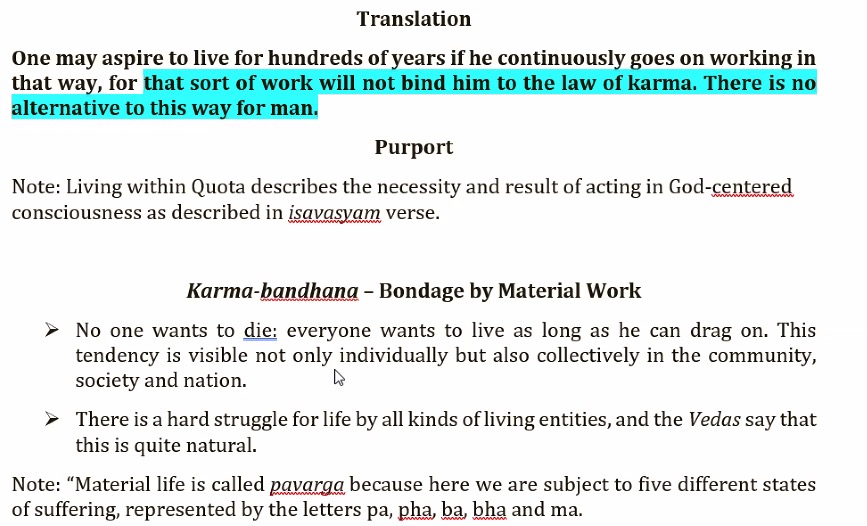
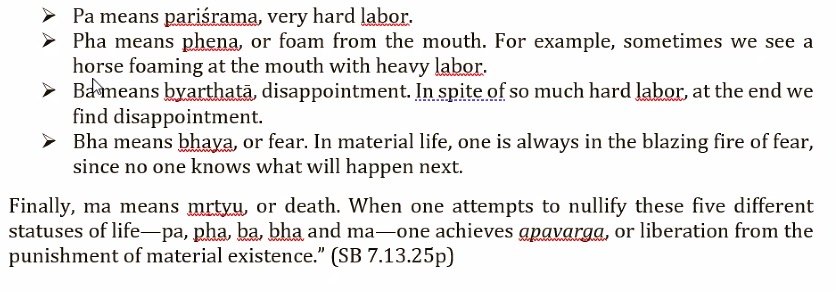
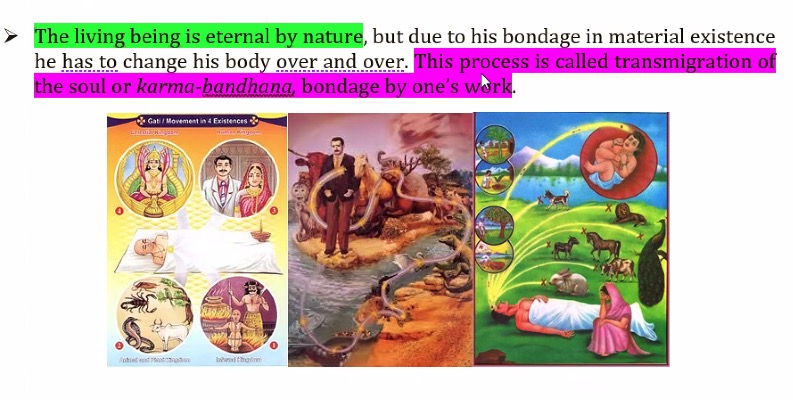
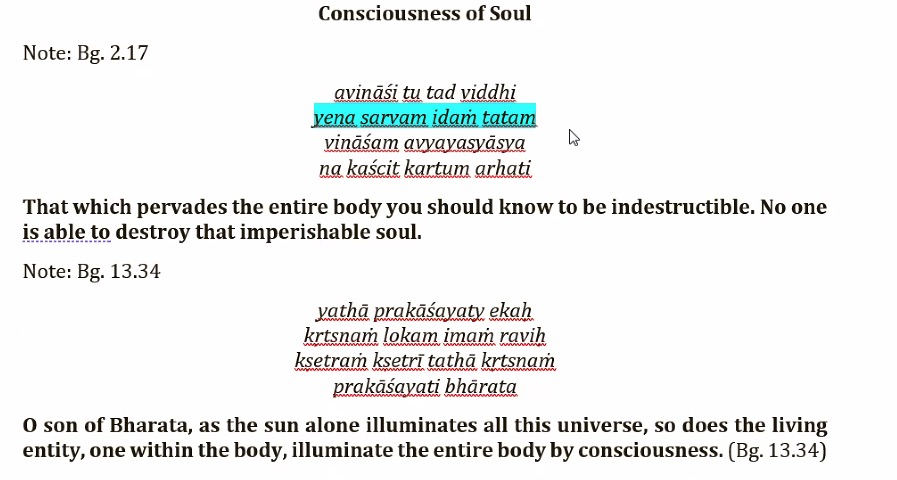
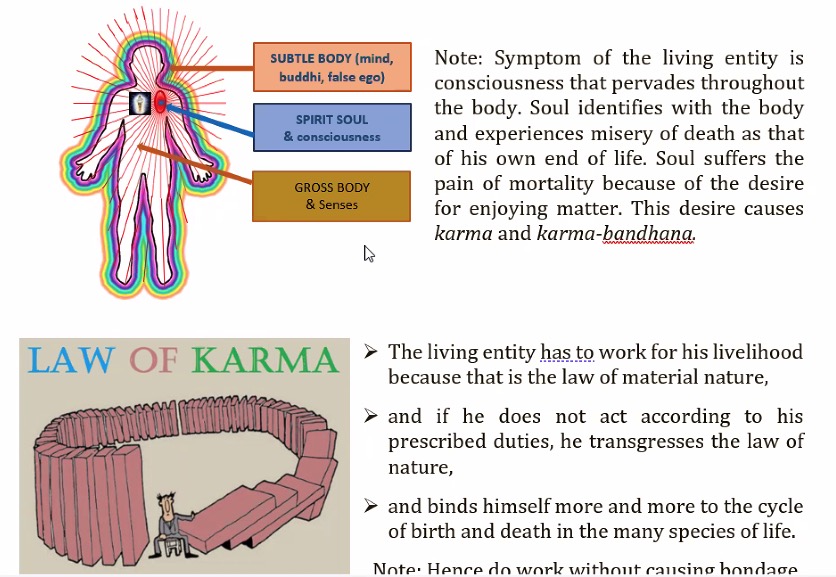
Contaminated consciousness
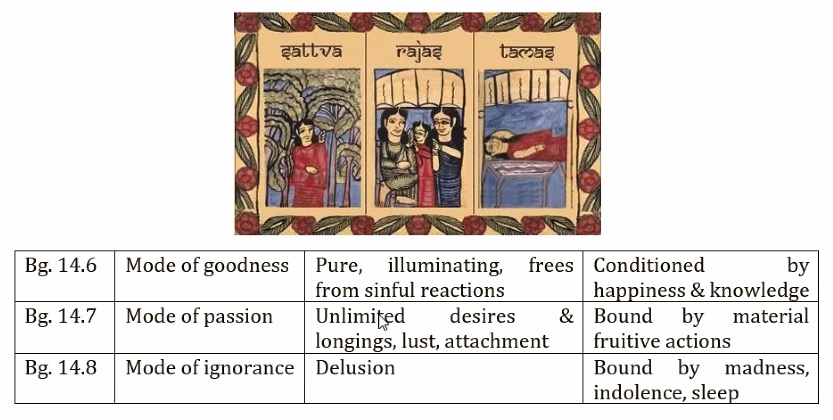
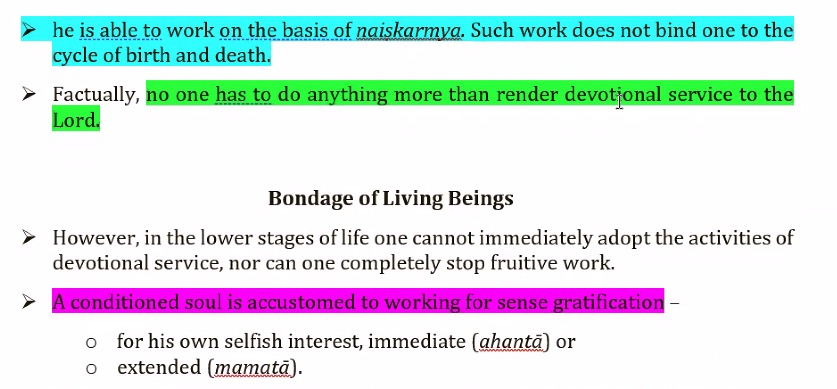
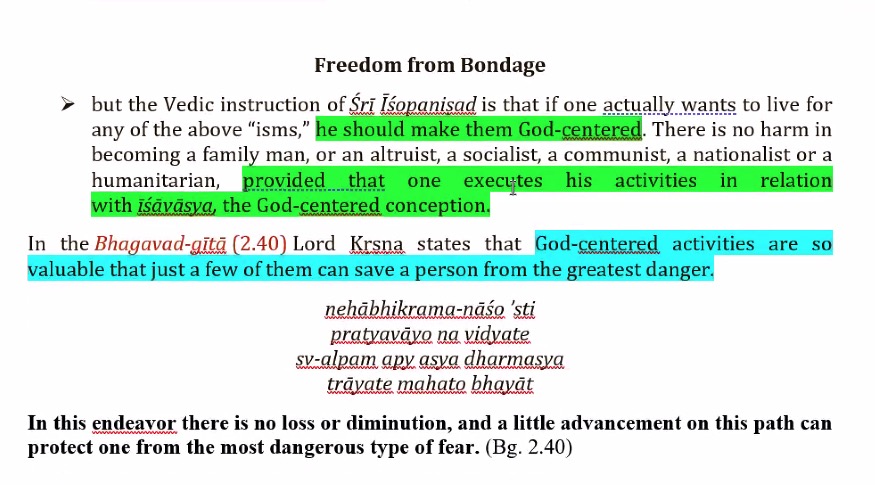
Krishna says go beyond the mode of goodness where we perform pious activities.
There are 3 types of sukriti -
- Bhukti - wealth
- Mukti - liberation / moksha
- Bhakti - devotional service
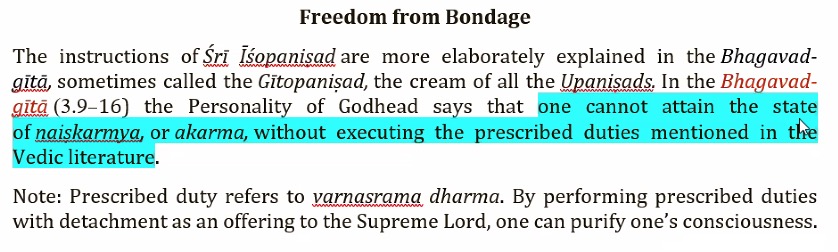
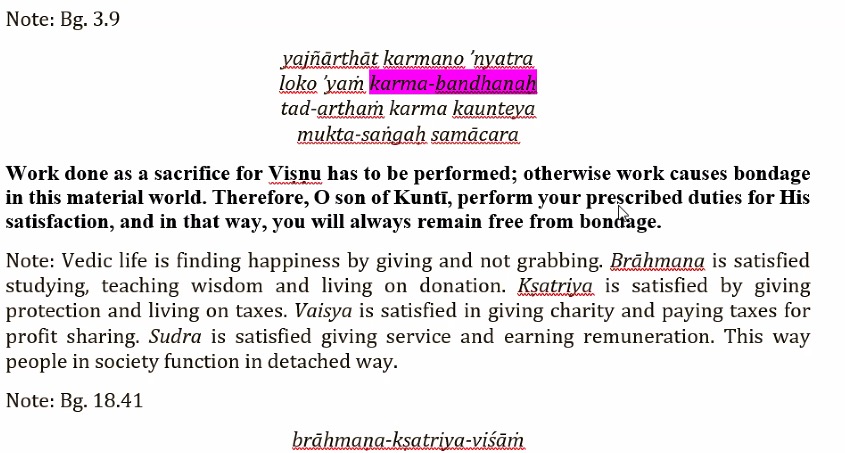
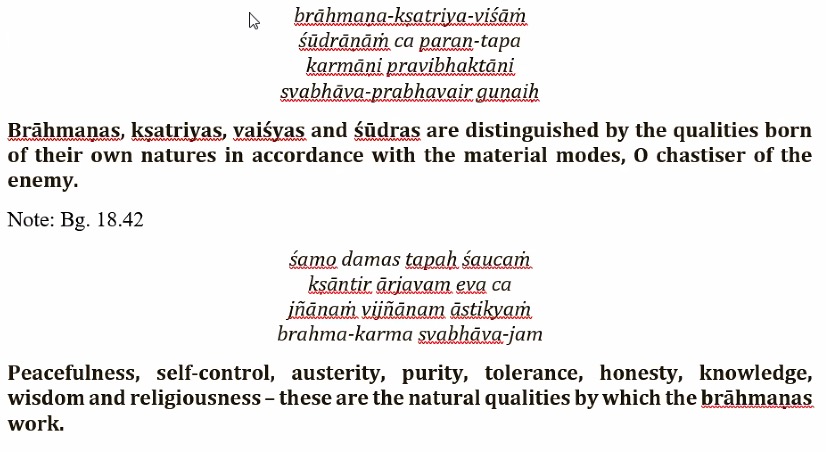
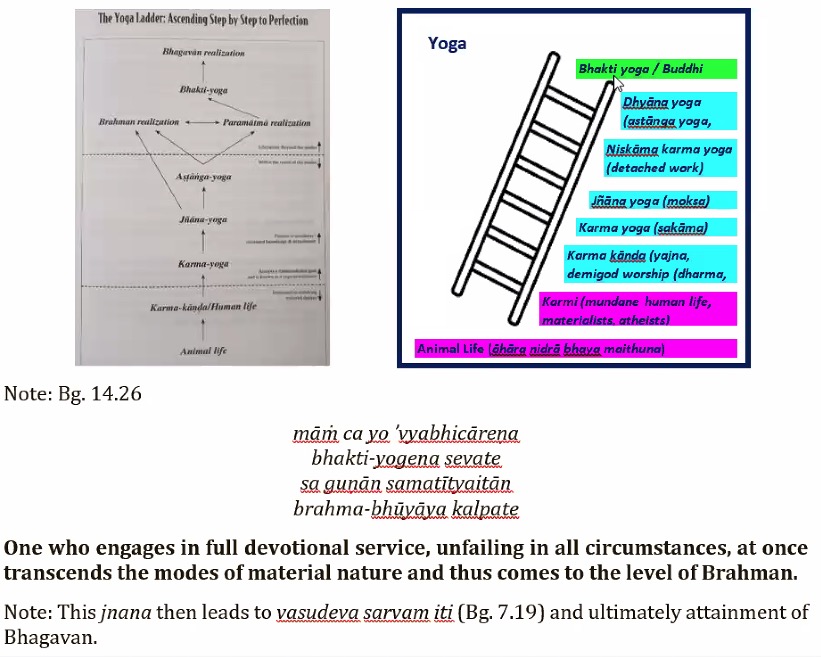
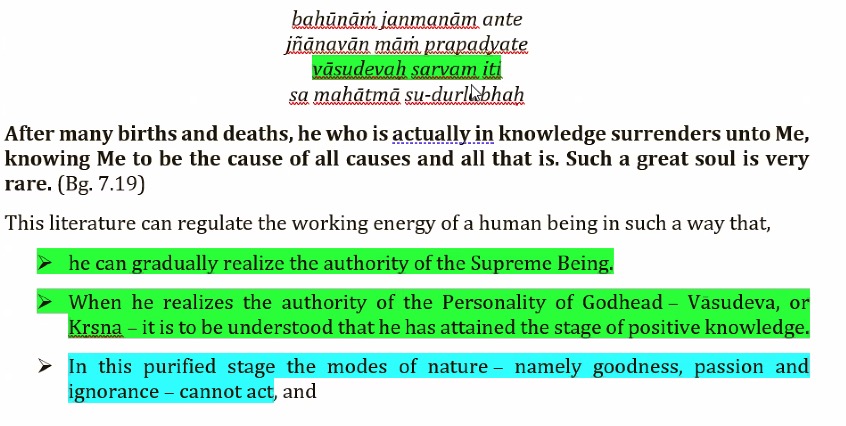
Verse 3
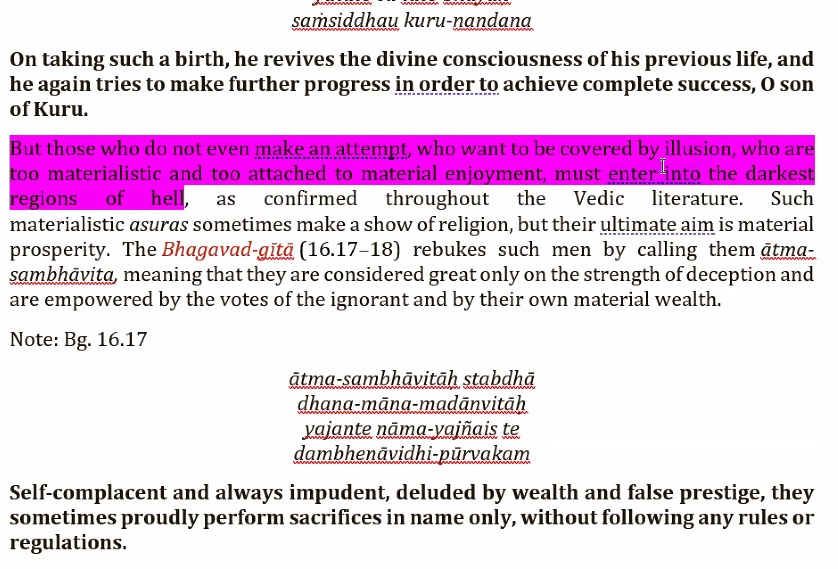
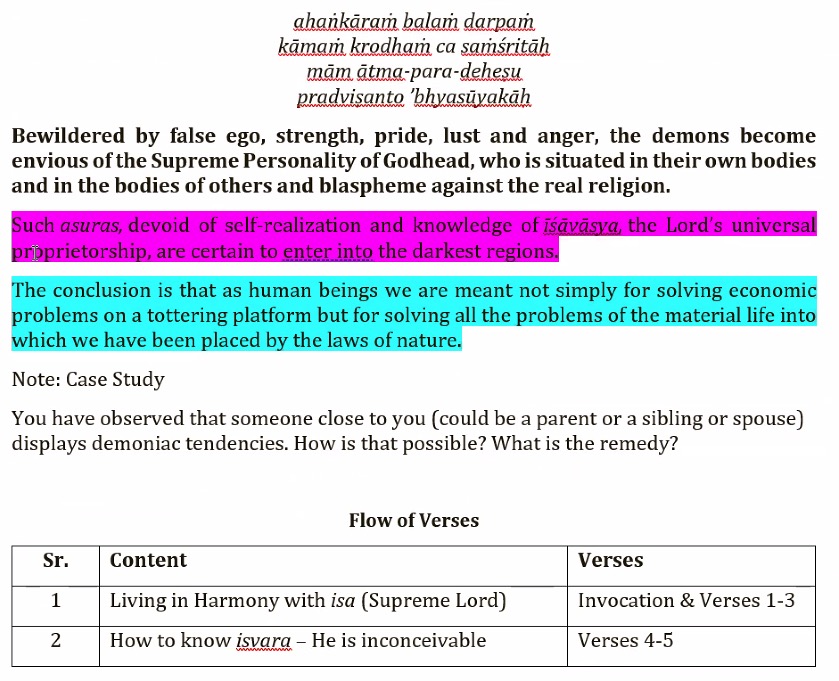
Session 3 - 27 January 2026
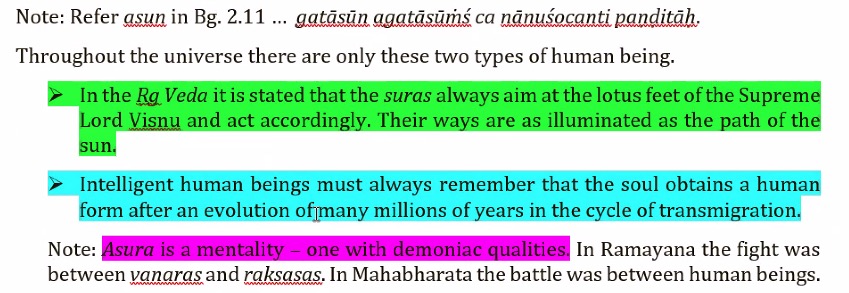
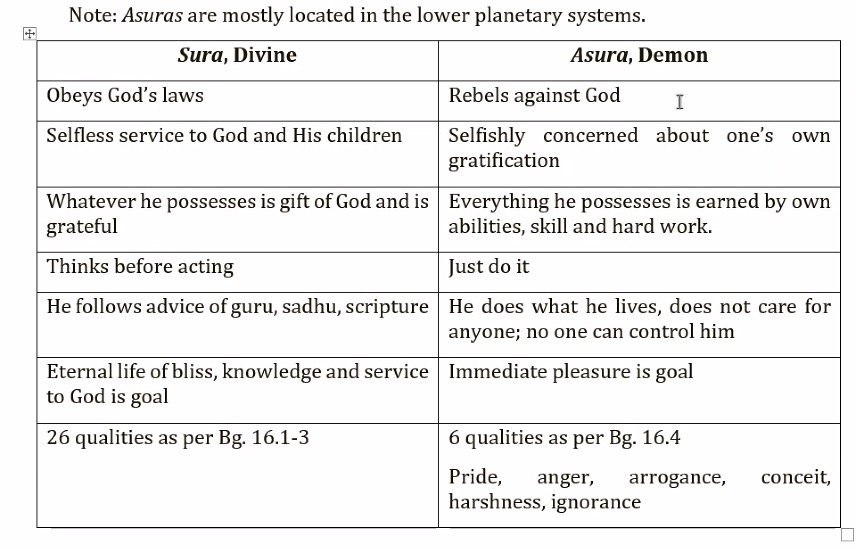
Subsconcious mind = citta / consciousness - it is drop of the mahat-tattva - surrounding the soul. This is where the contamination happens.
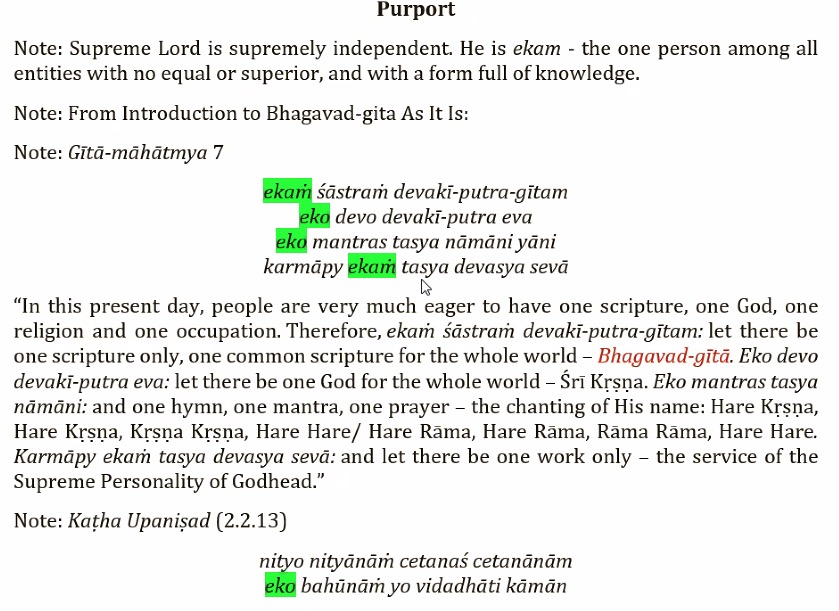
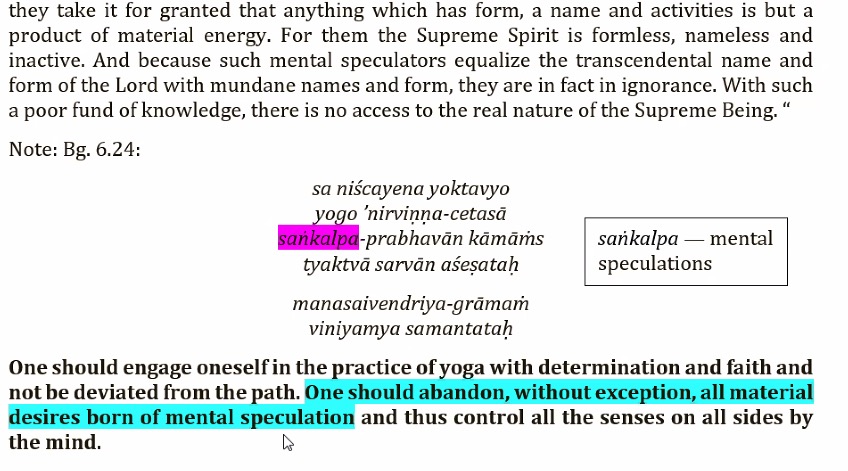
Actual meaning of oneness according to Acaryas is one in quality, but different in quantity - acintya bheda abheda. Aham brahmasmi - I am Brahma, but subservient brahma.
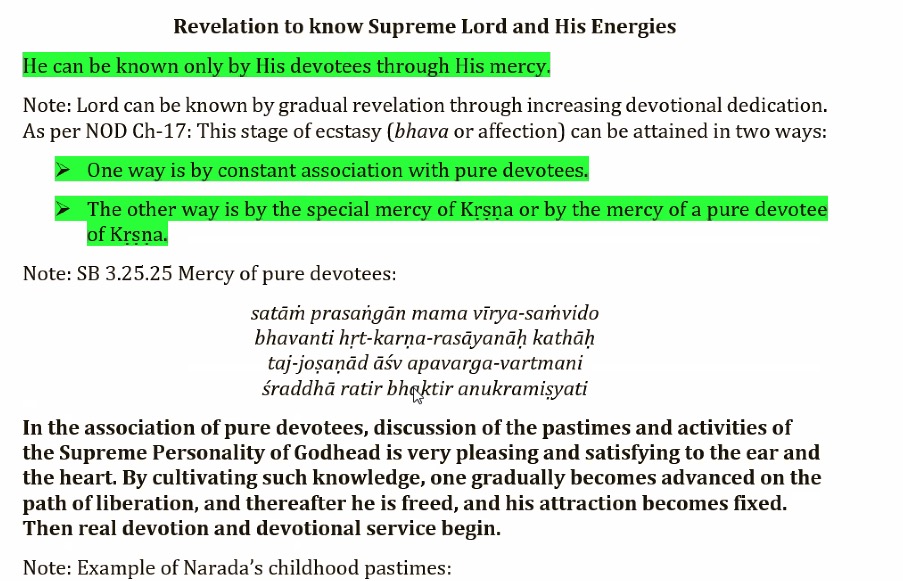
3 things are powerful, when obtained from pure devotees -
- Dust from lotus feet
- Water washed over the lotus feet
- Remnants of foodstuffs
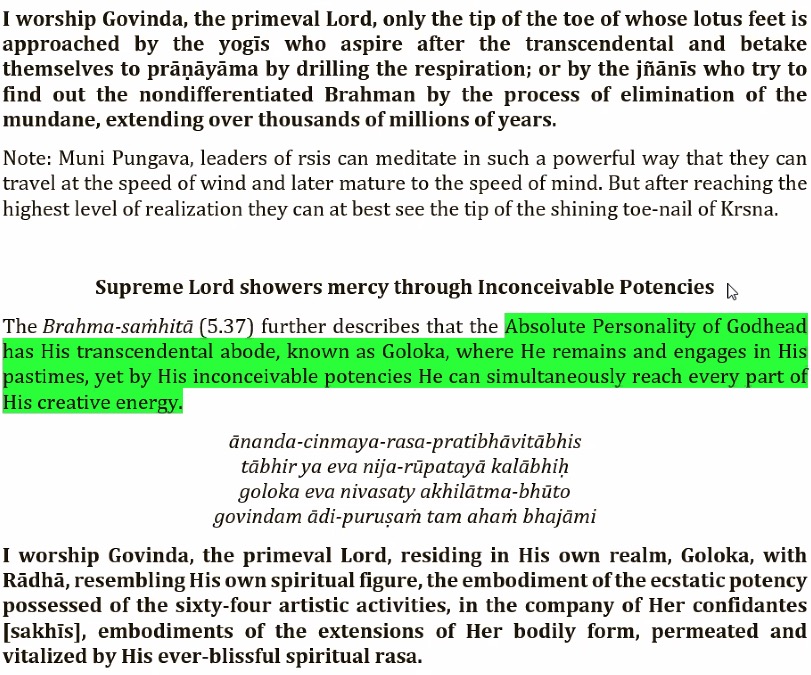
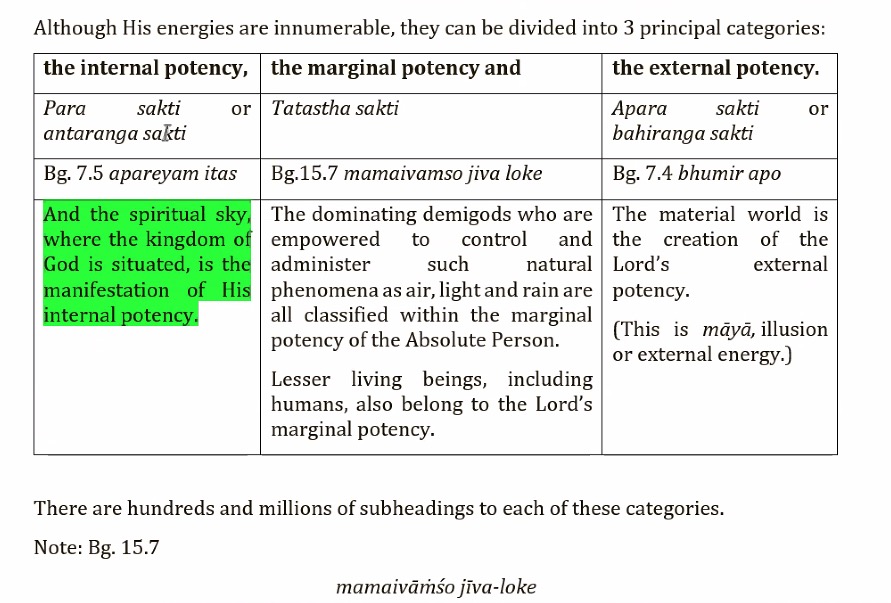
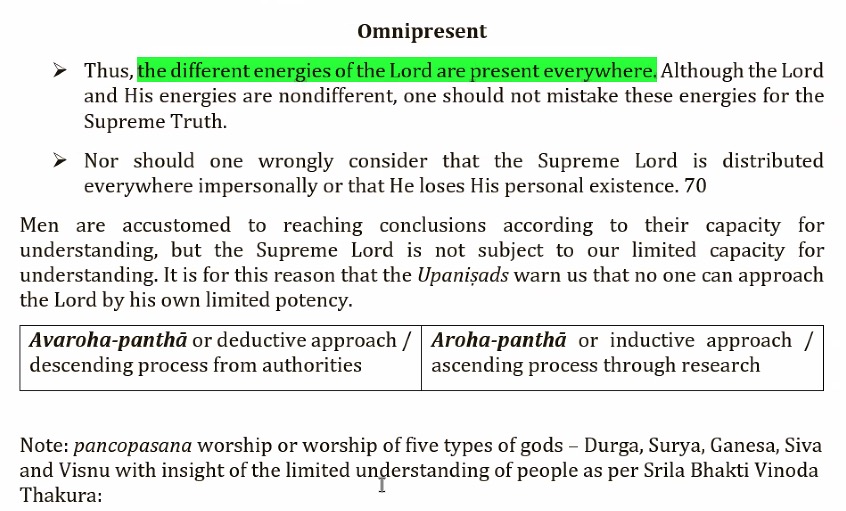
Avaroha-pantha - believe in Guru, sadhu and sastra
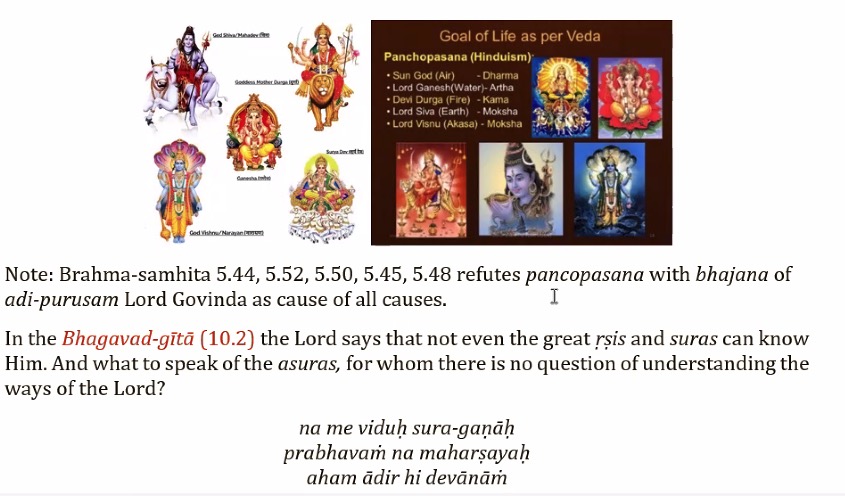
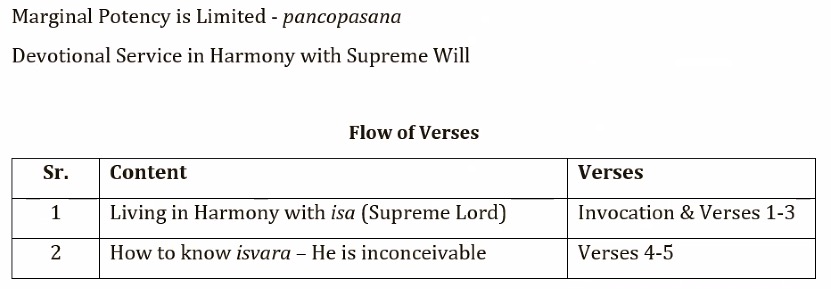
Panchopasana done when not believing in Krishna
Sakti (Durga) - Surya dharma - Ganpati - Siva and Visnu - progression of belief
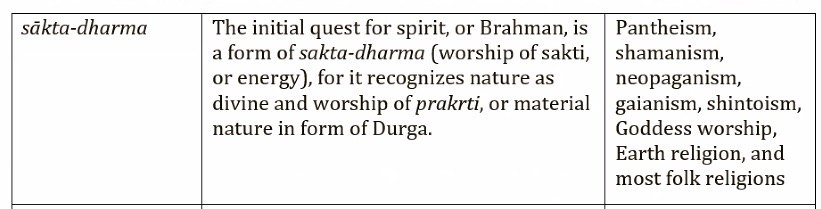
Worshipper of Shakti
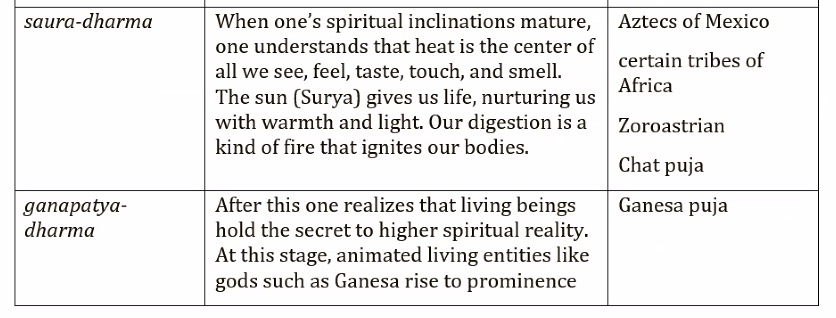
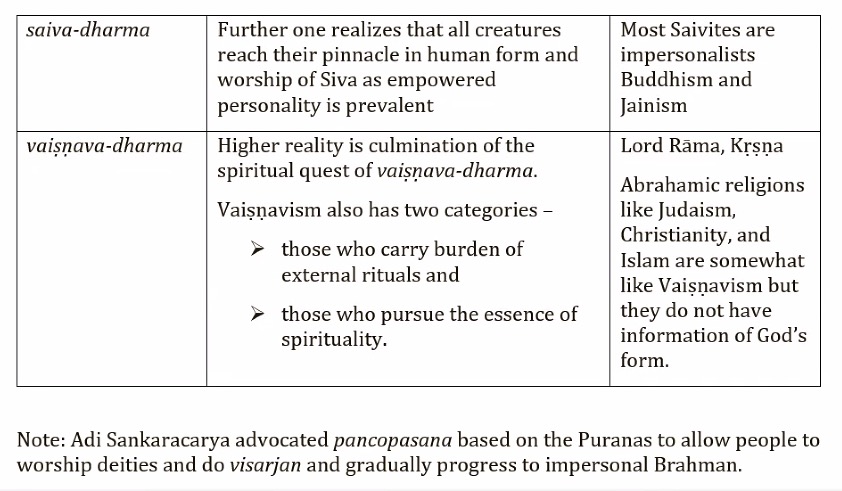
Brahma Samhita refutes Panchopasana
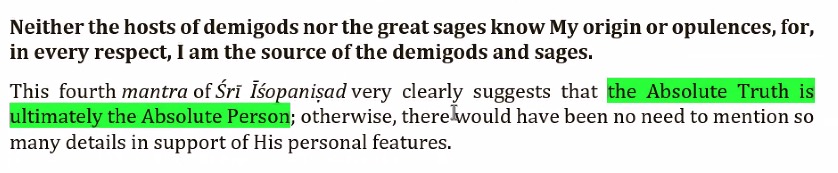
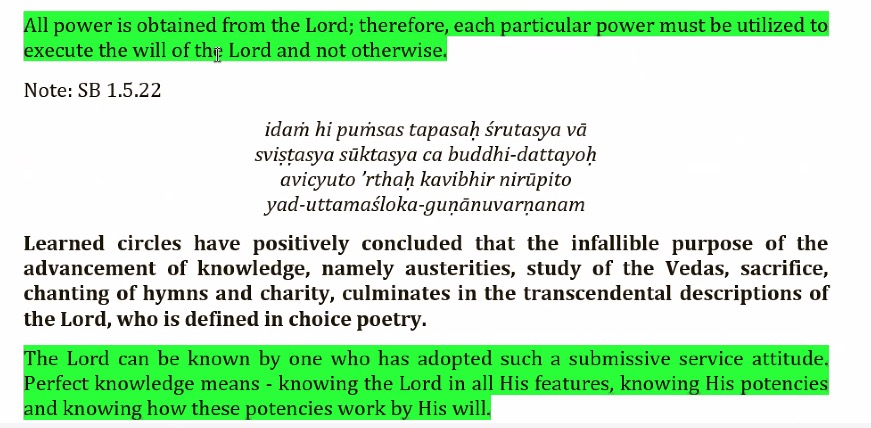
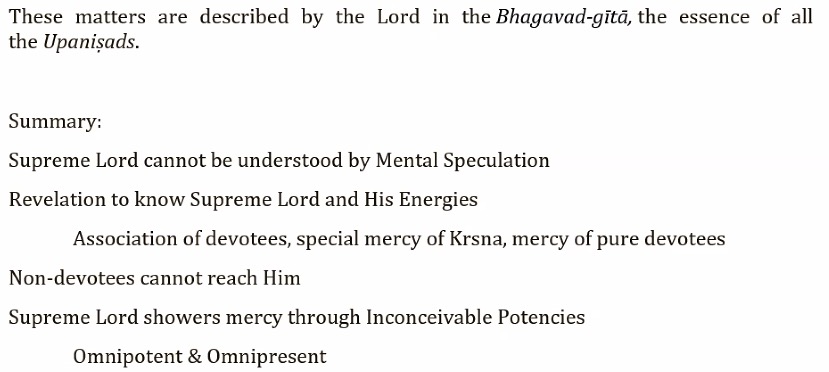
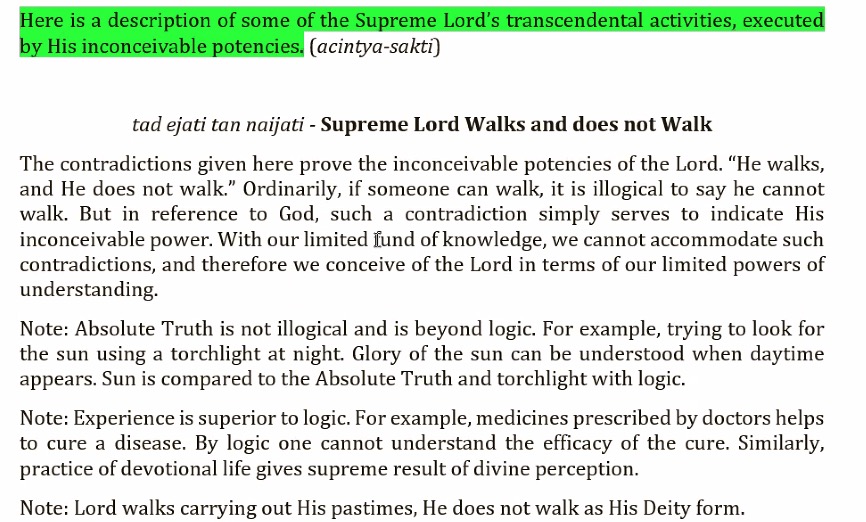
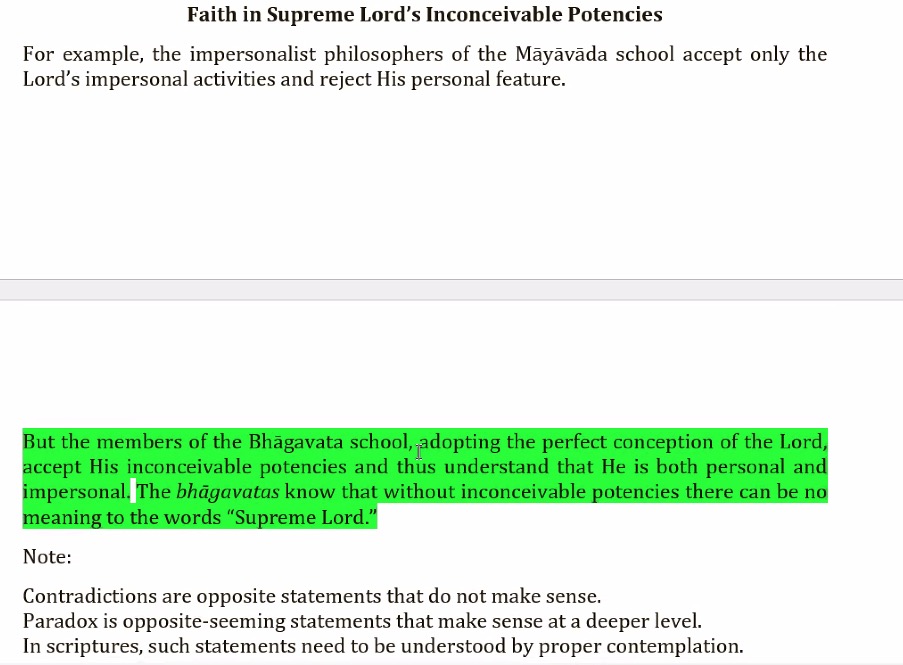
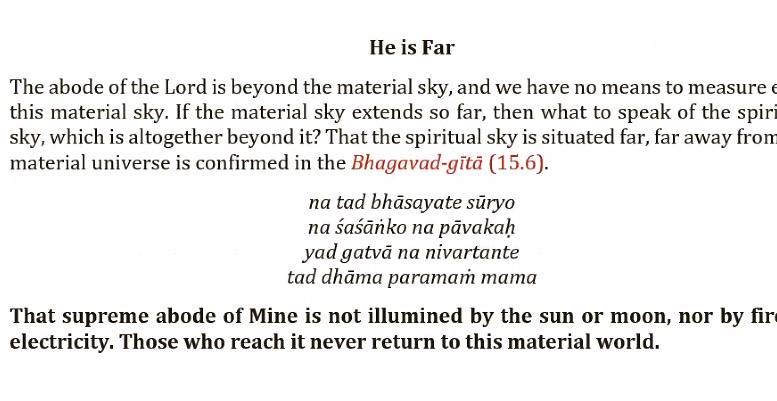
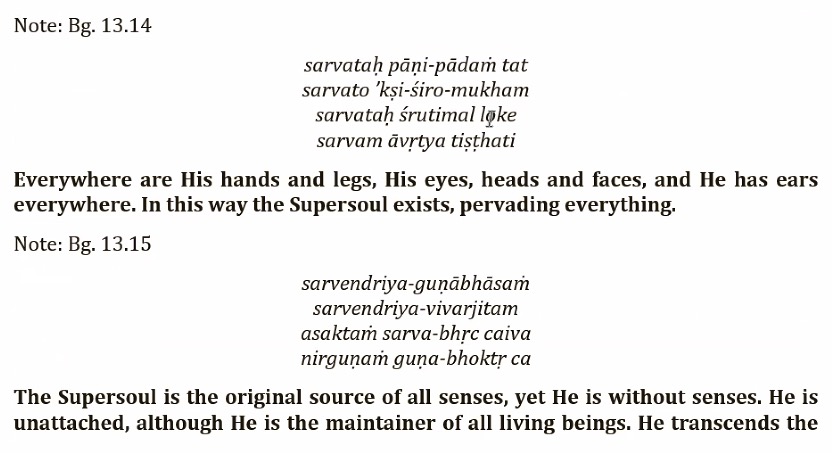
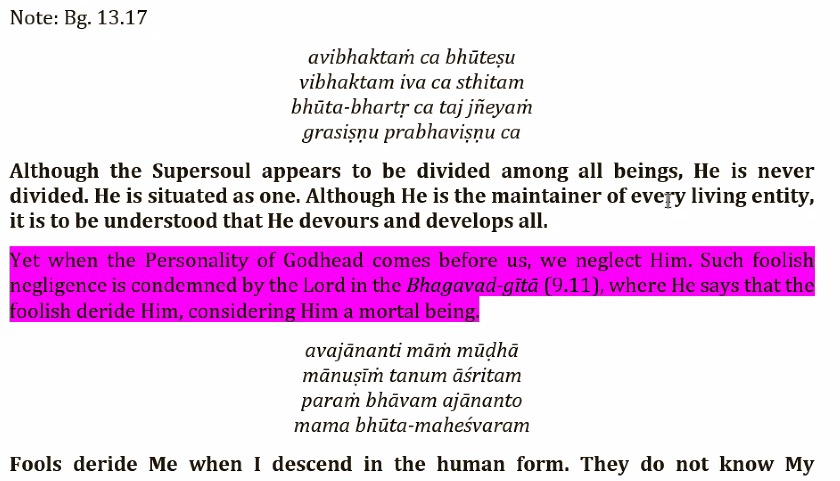
BG 13.16 and BG 13.17
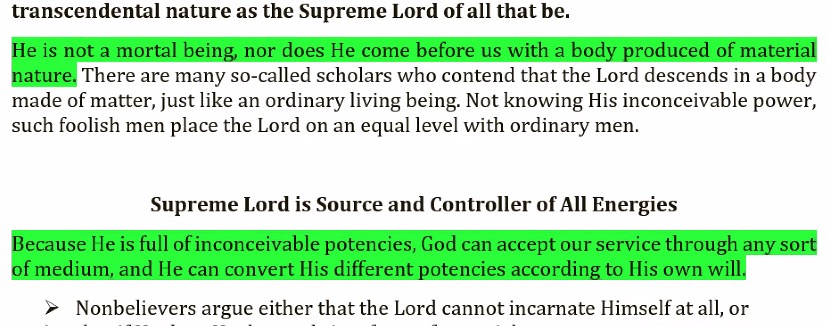

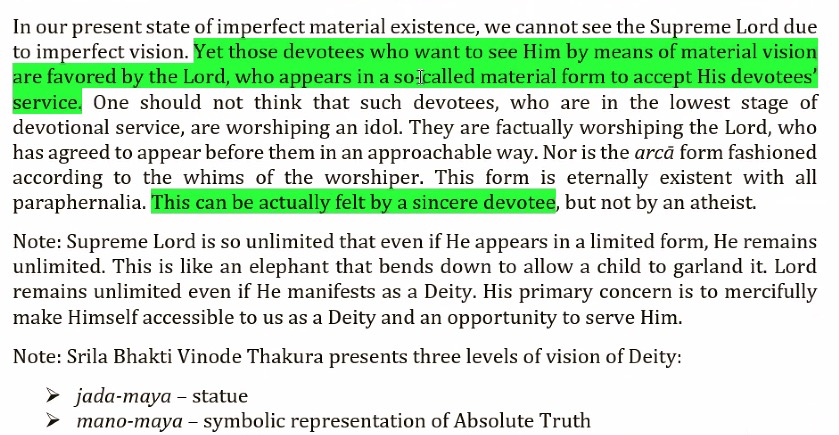
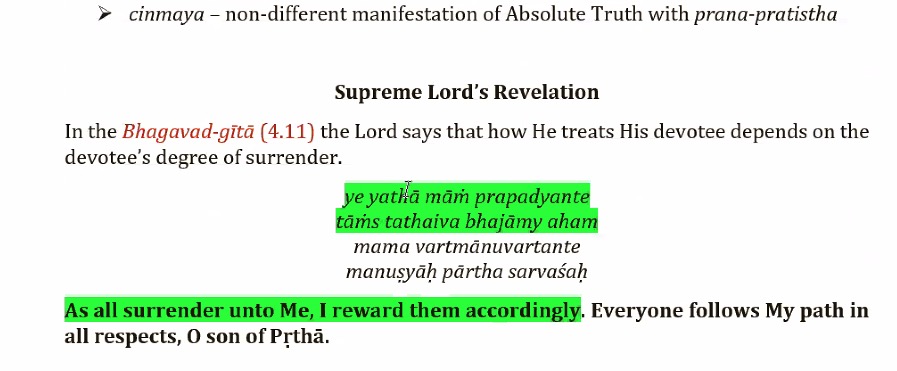
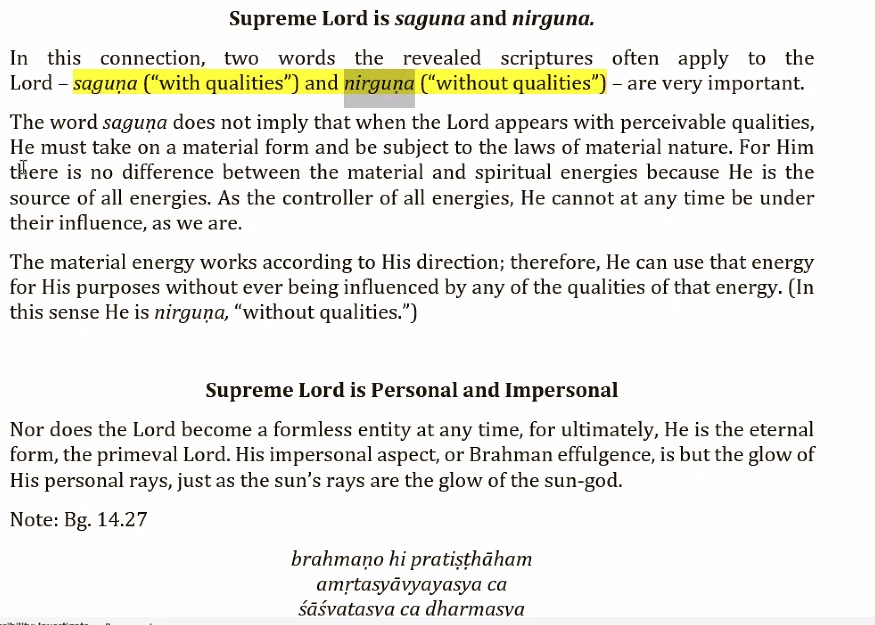
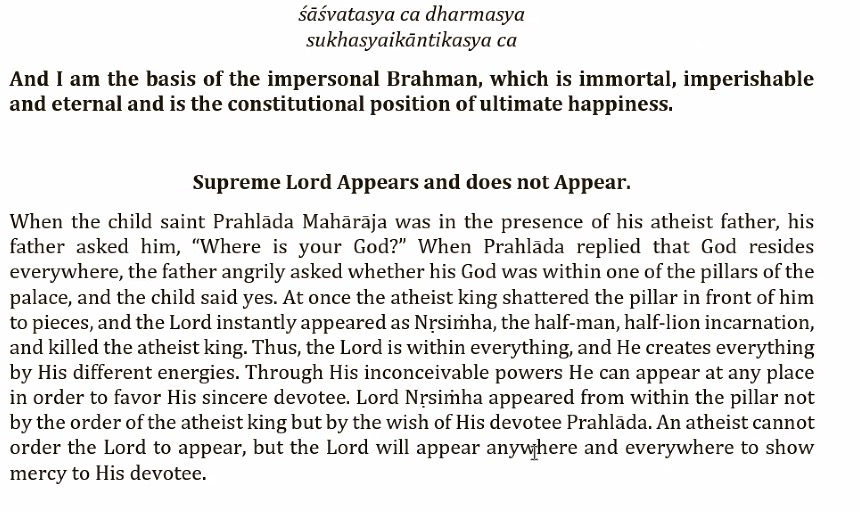
Deity Form
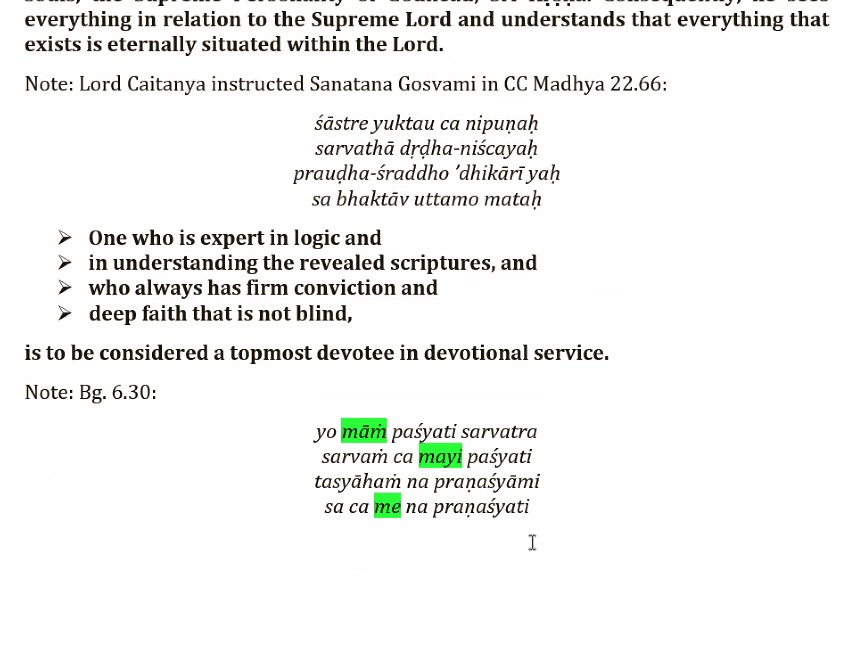
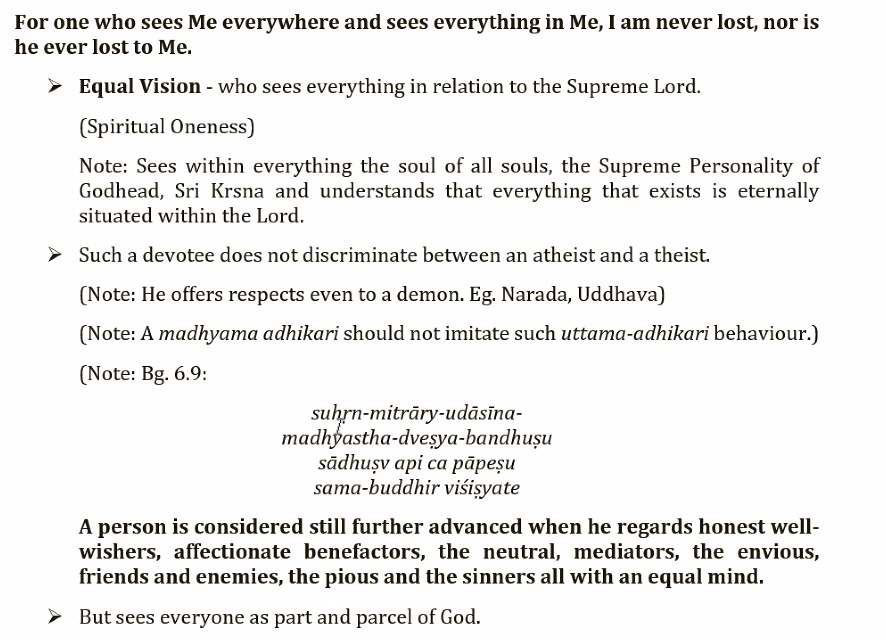
Verse 6
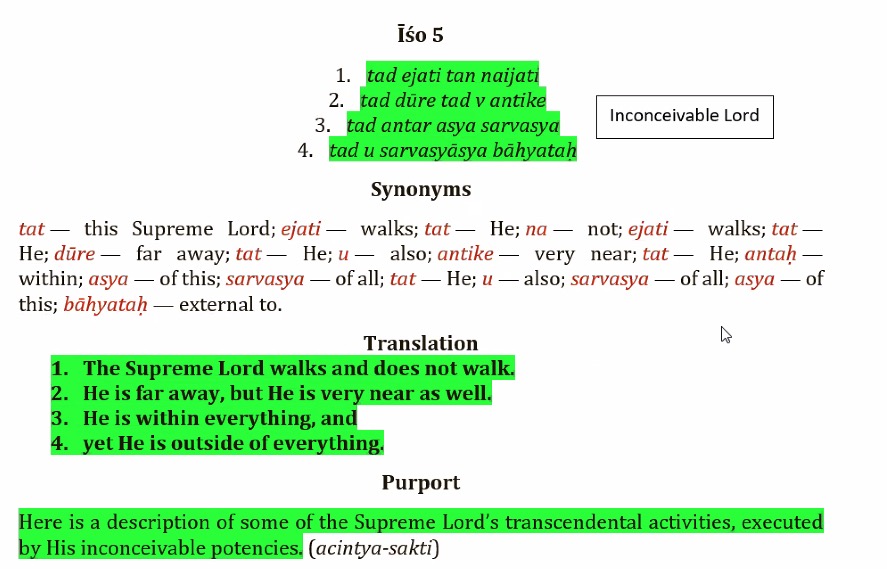
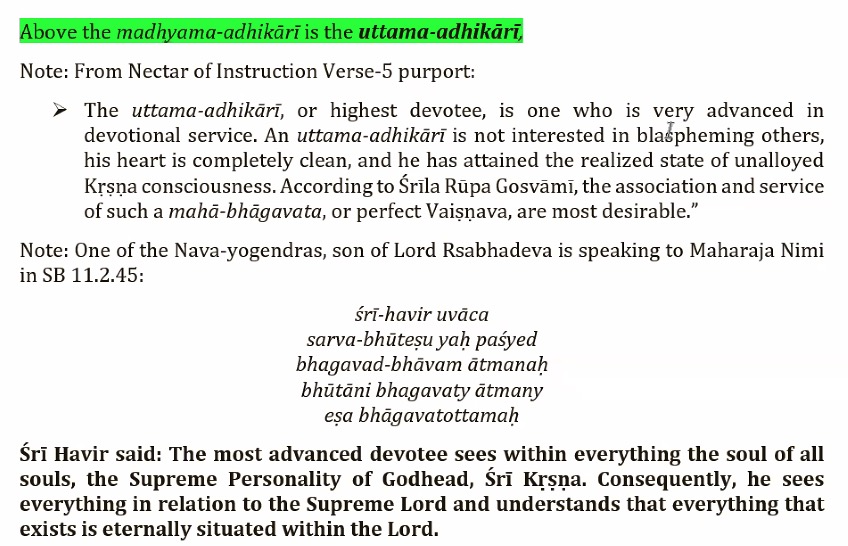
same as NOI verse 5
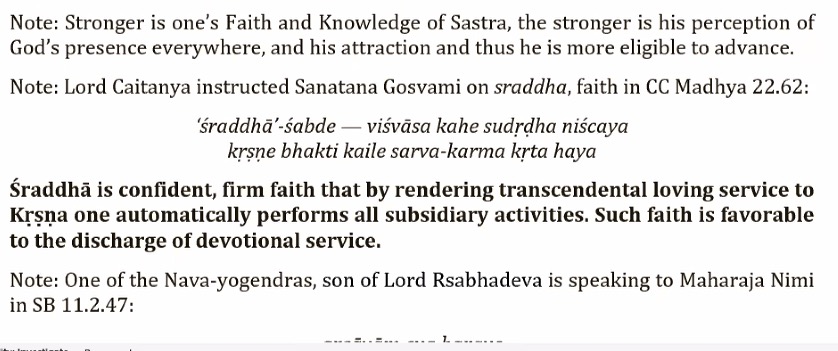
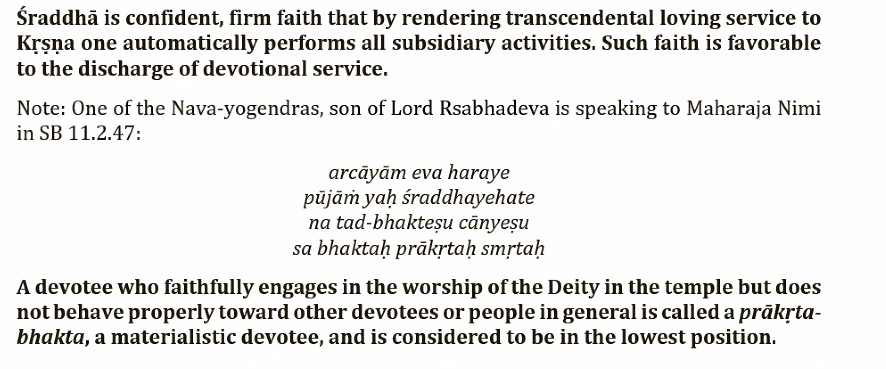
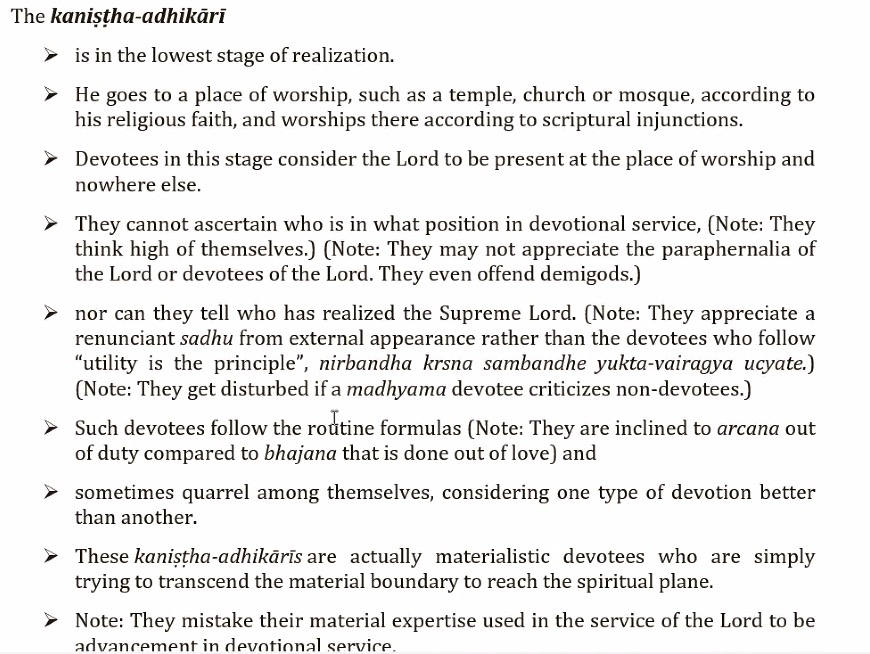
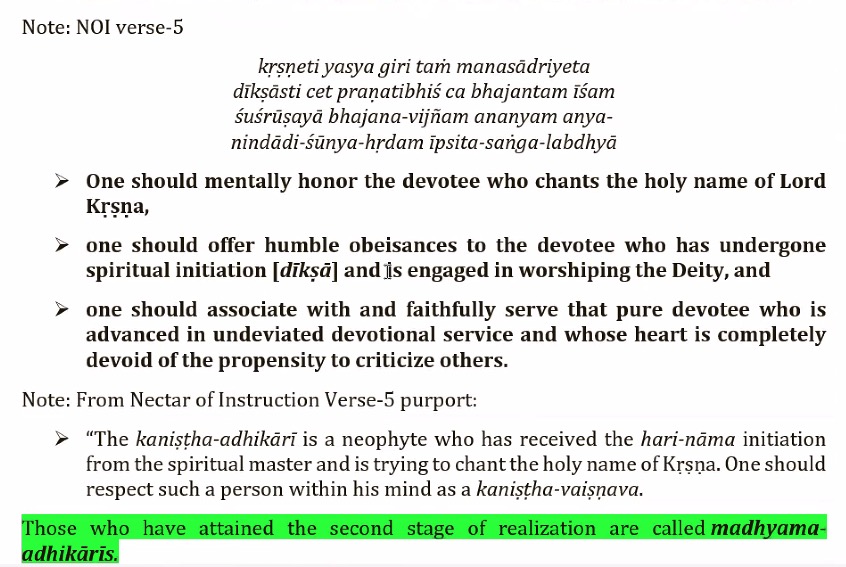
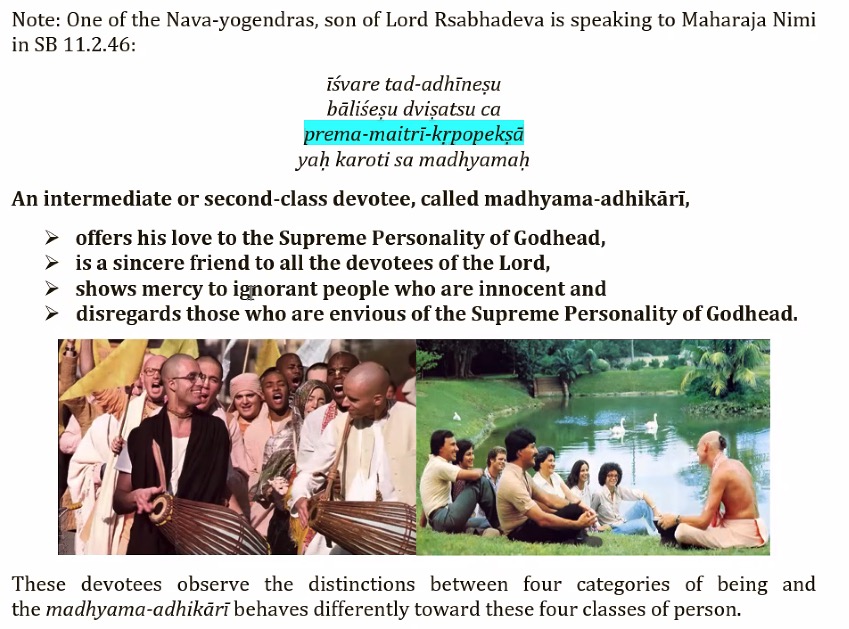
Madhyam Adhikari
Session 4 - 29 January 2026
Session 5 - 3 February 2026
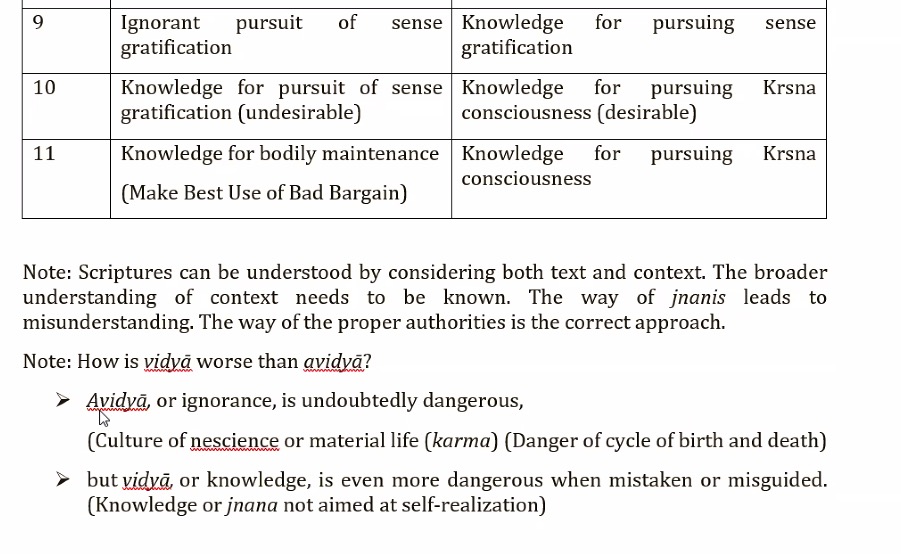
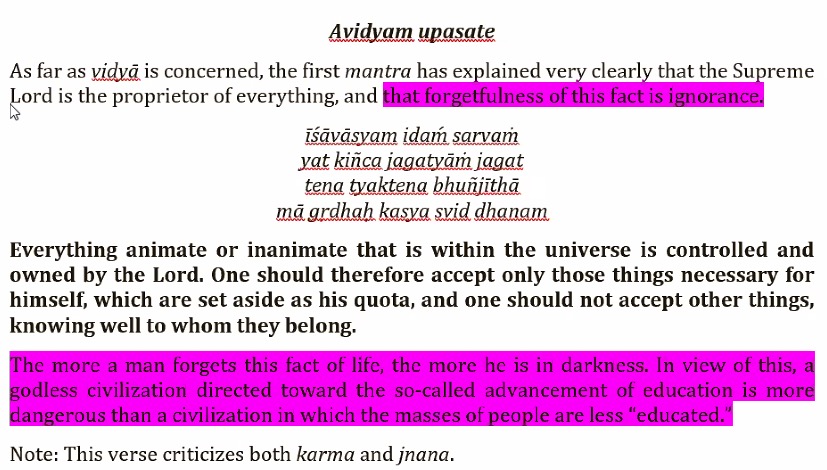
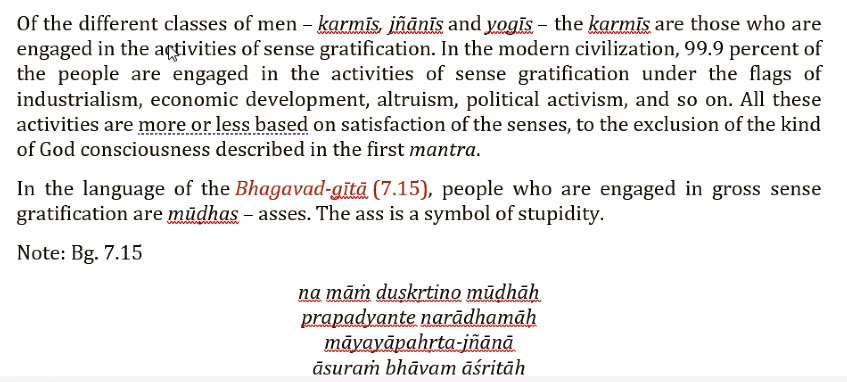
Verse 9
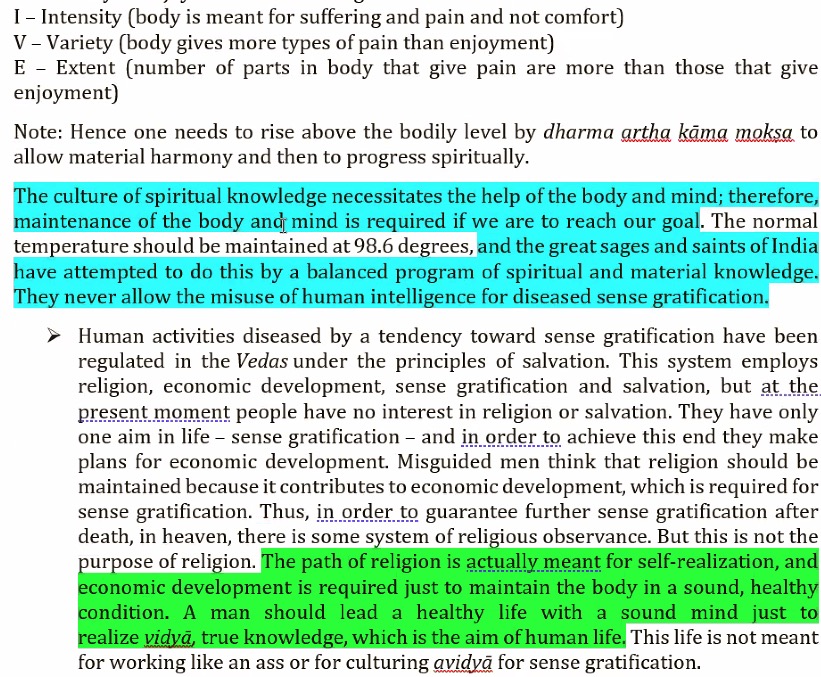
Priorities according to SP -
- Health
- Chanting
- Seva
- Reading


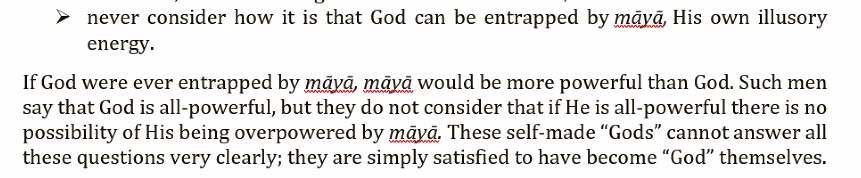
Hari Bhakit Sudhodaya sloka -

Verse 10




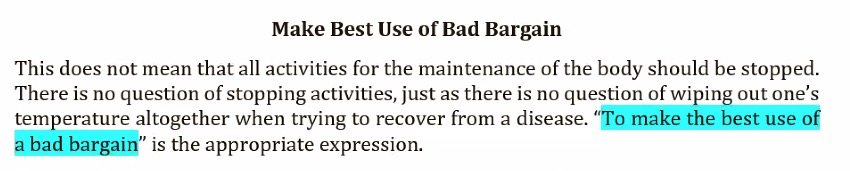
Verse 11
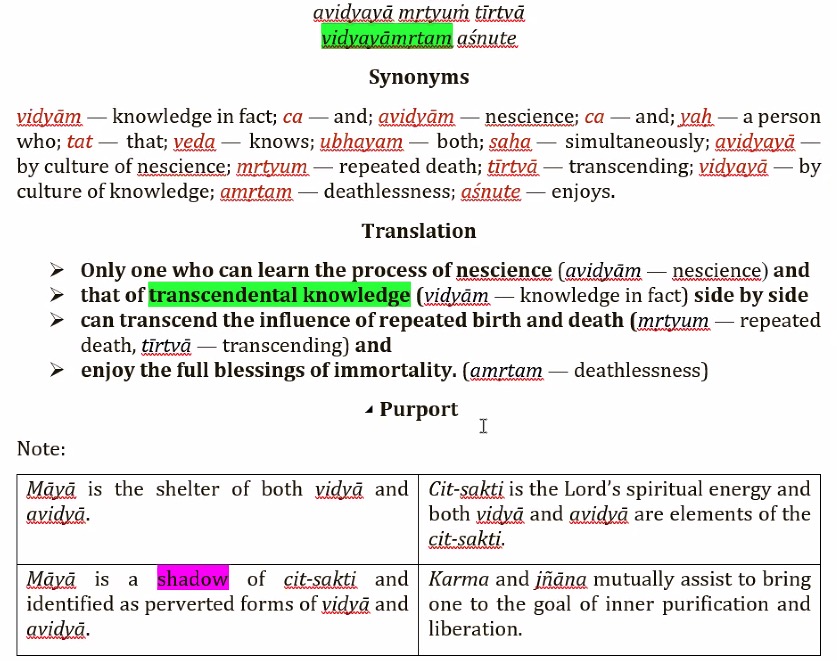
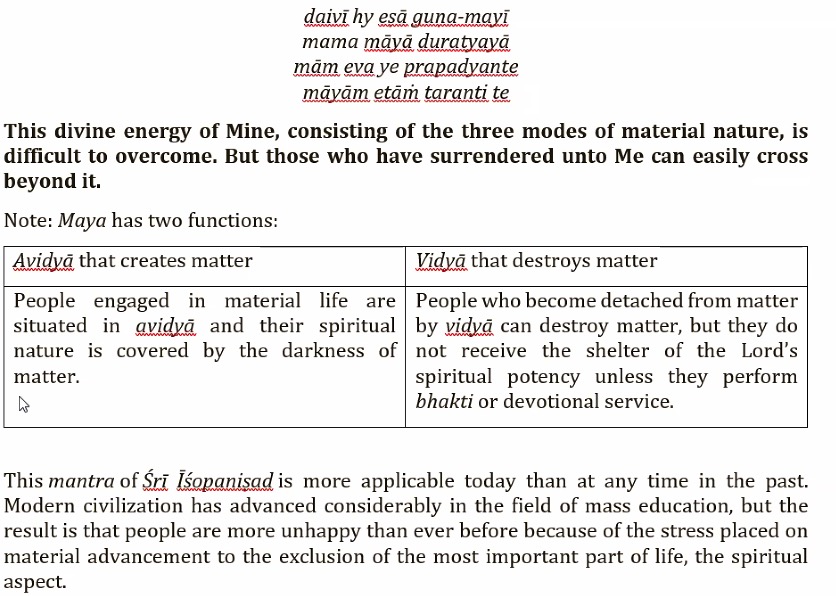
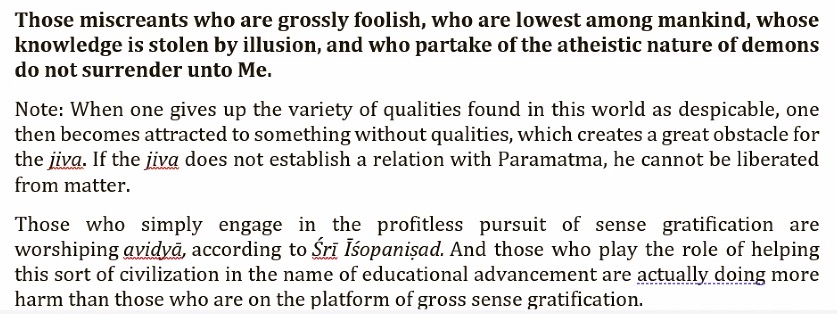
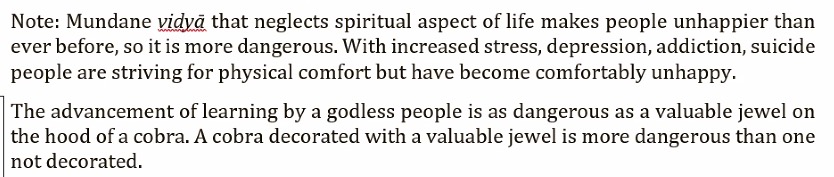
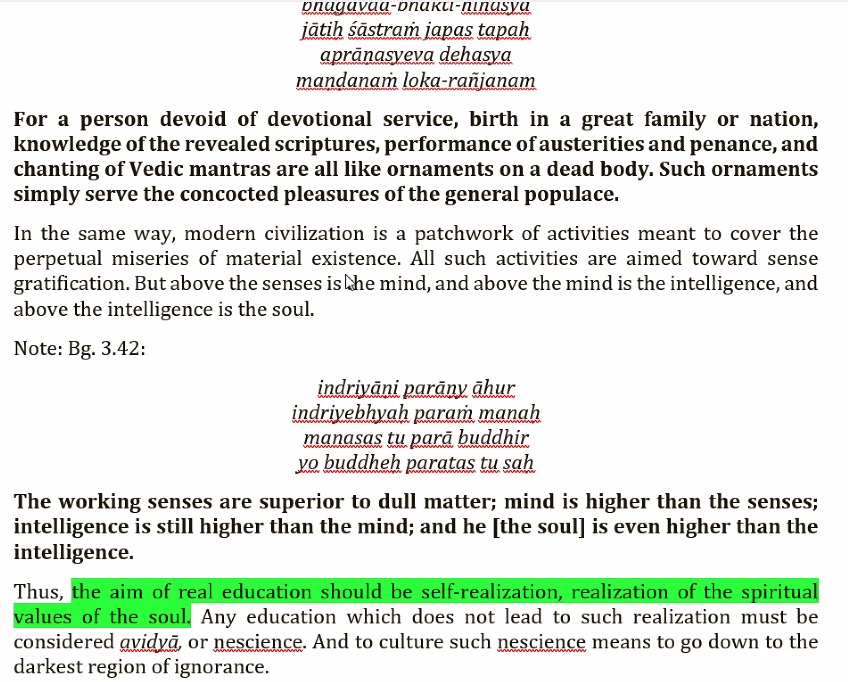
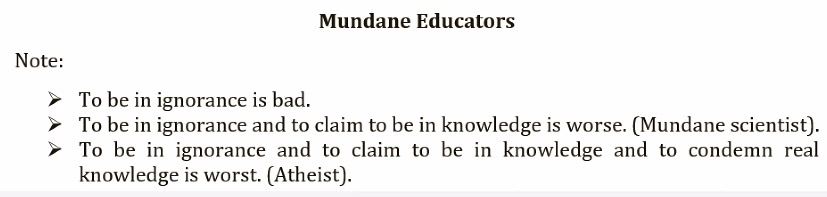
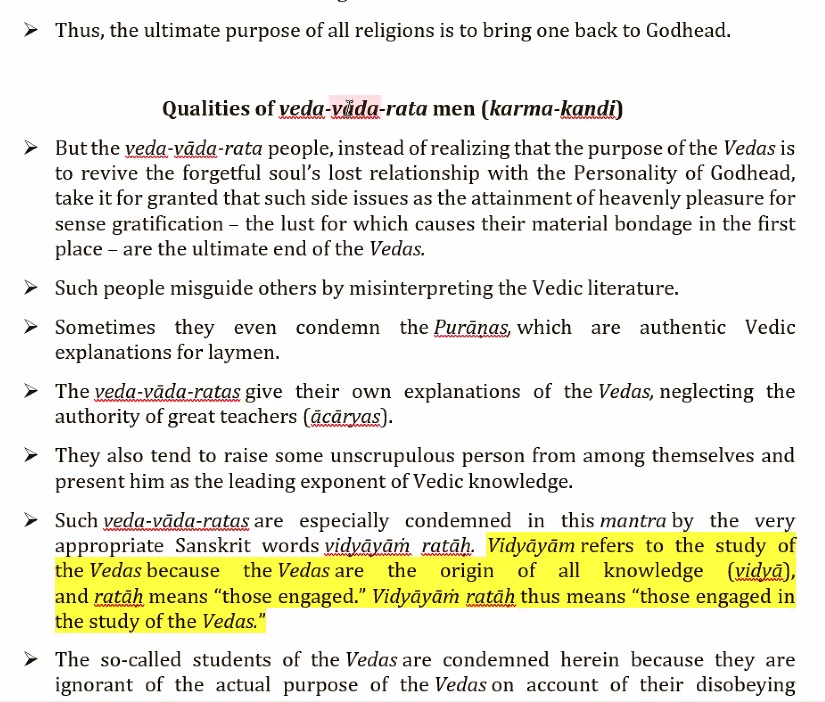
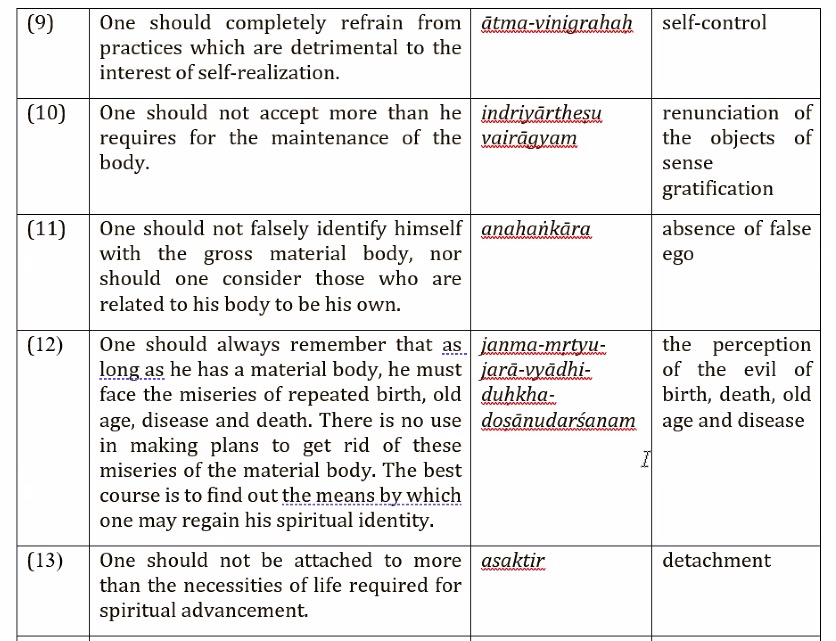
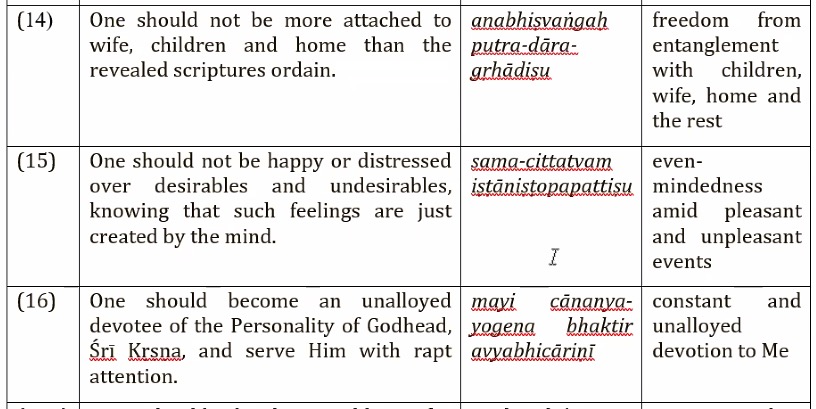
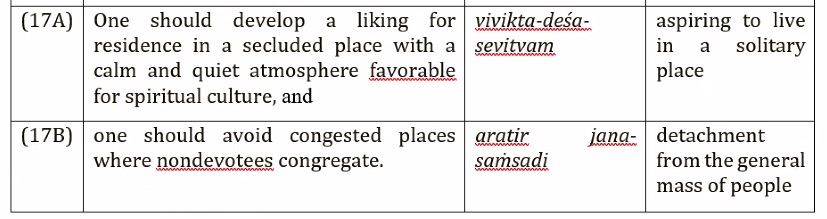
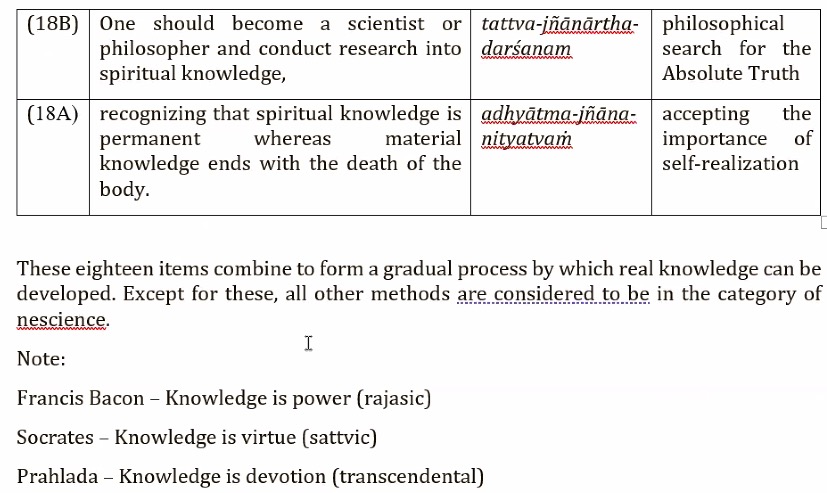
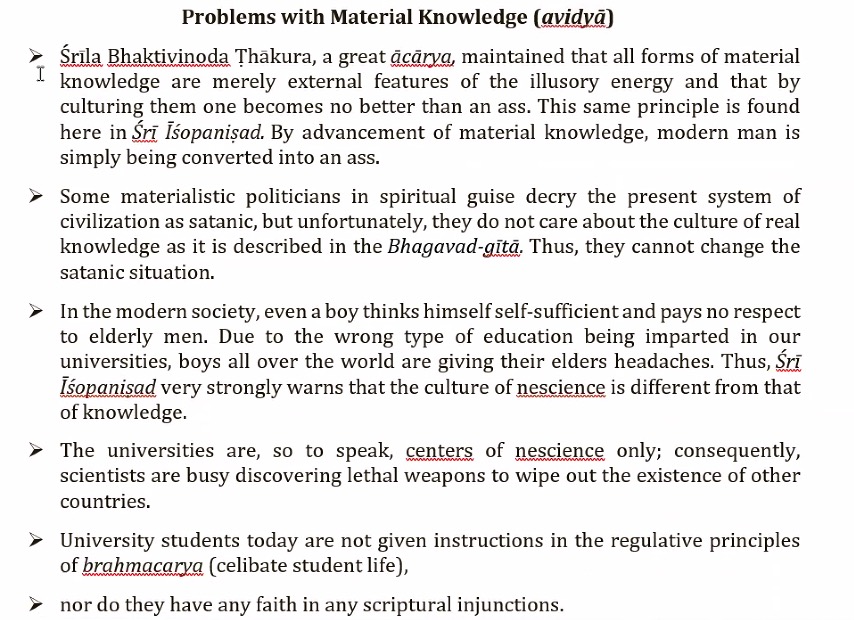
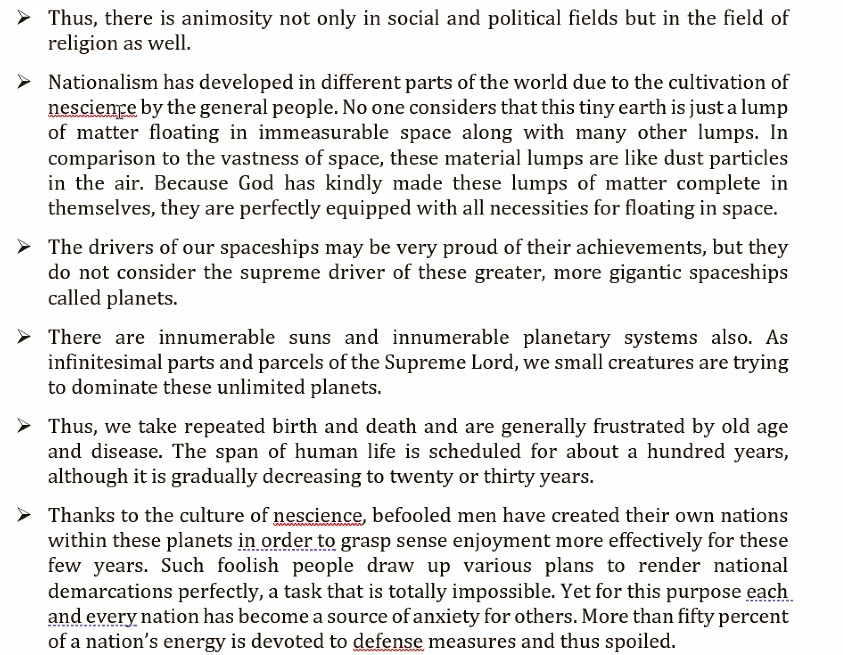
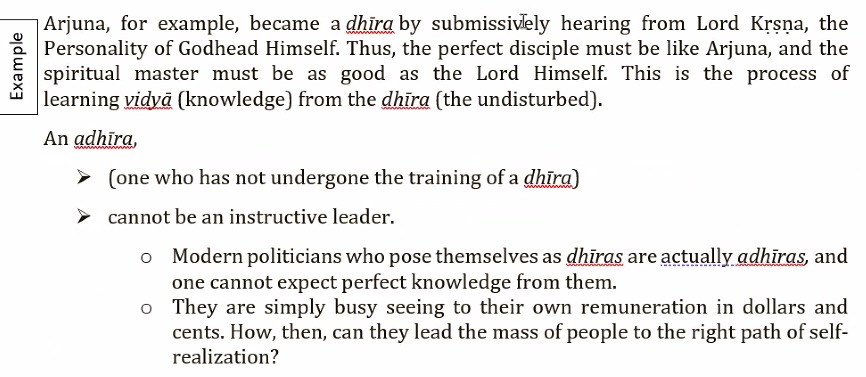
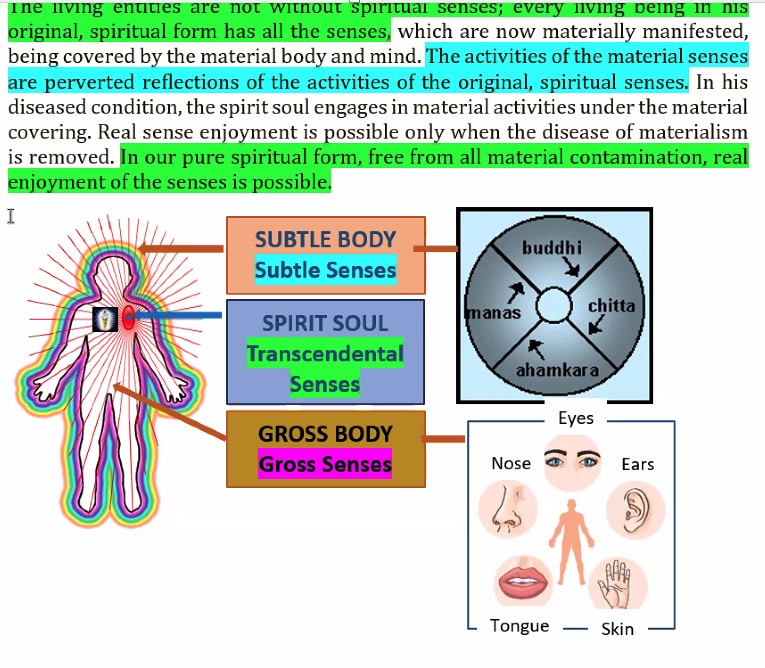
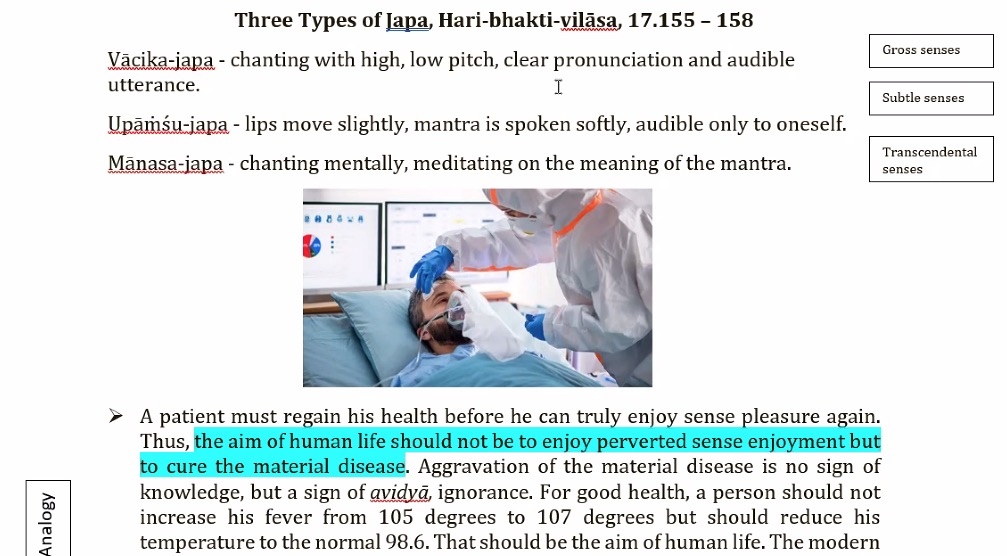
Only when we learn the process of nescience, we can appreciate the transcendental knowledge. We can compare and appreciate the higher / better transcendental knowledge.
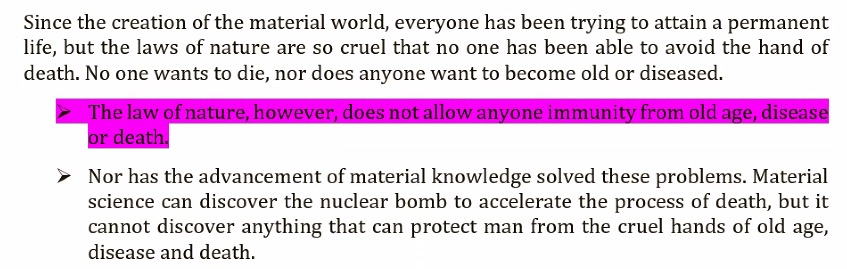
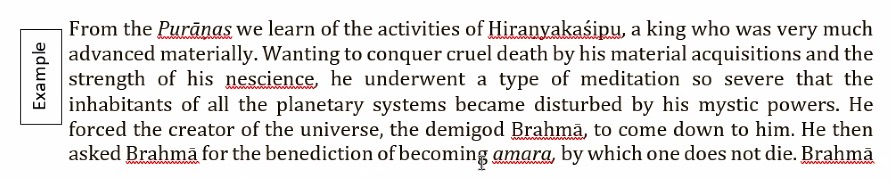

D - Duality of
Verse 12
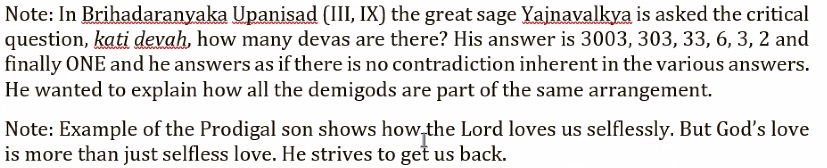
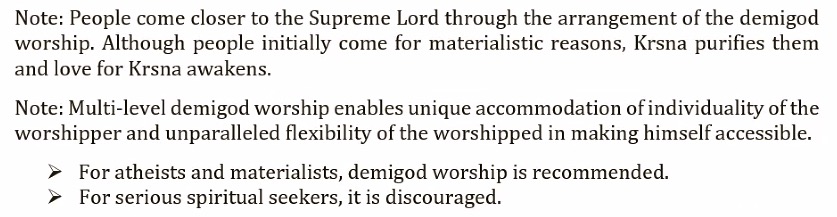

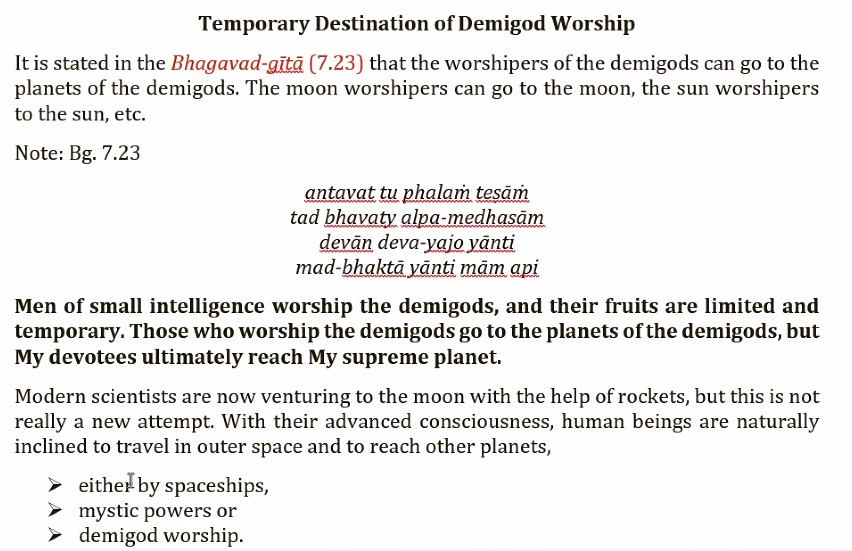
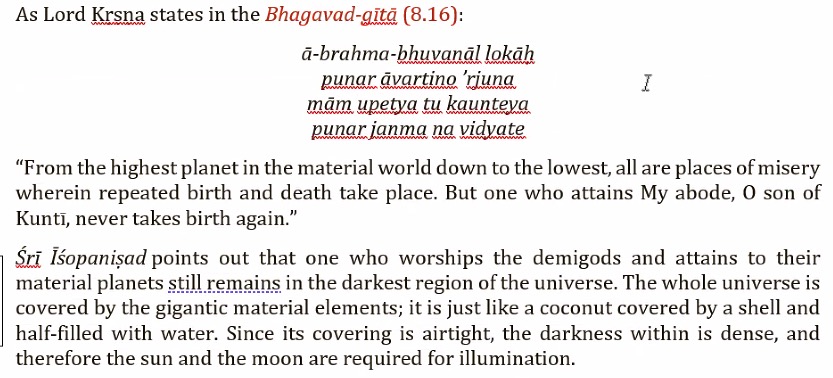
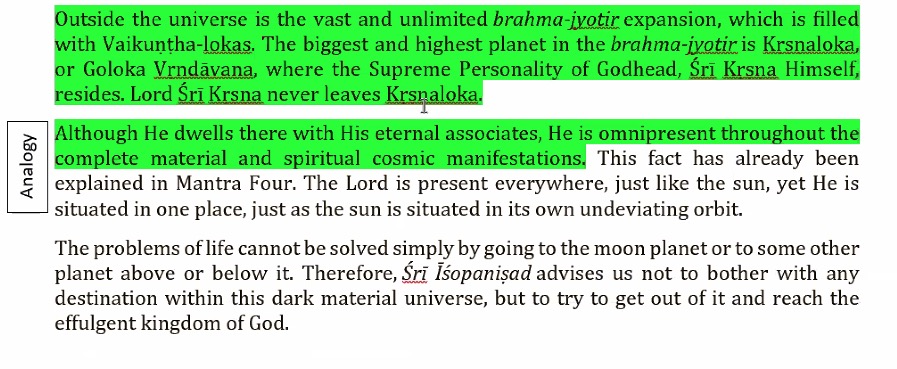
BG 7.23
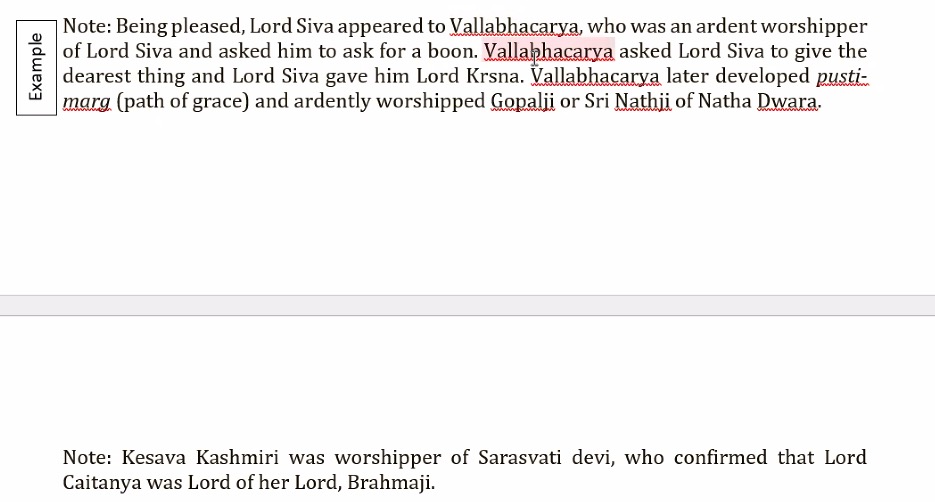
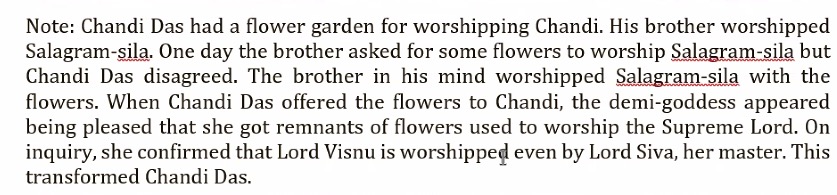
Session 7 - 10 February 2026